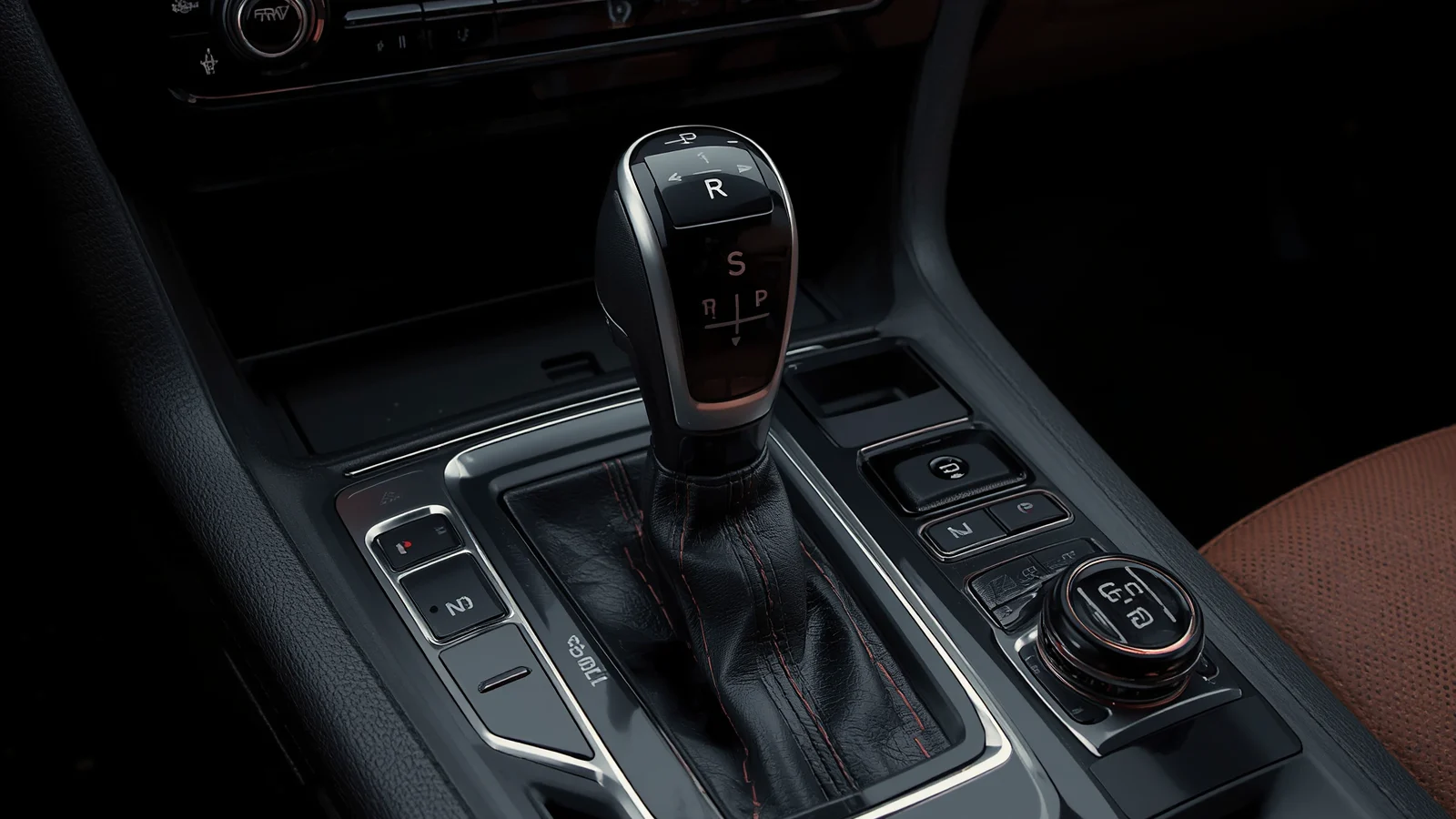
Definition: The S on a gear shift usually stands for Sport mode. It changes how your car shifts gears by holding them longer, increasing engine RPM, and improving acceleration. Drivers often use S mode for faster response, overtaking, uphill driving, or a more performance-focused experience.
If you have ever looked at your car’s gear shifter and noticed the letter S, you may have wondered: what does S mean on gear shift? It’s a common question, especially for new drivers or anyone switching from a manual to an automatic vehicle.
Modern automatic transmissions have evolved far beyond simple P (Park), R (Reverse), N (Neutral), and D (Drive). Today, many cars include extra driving modes designed for different road conditions and driving styles. One of the most common is S mode.
Understanding what S means can help you drive smarter, improve your car’s performance, and even avoid unnecessary wear on your transmission. In this guide, you’ll learn exactly what S mode does, when to use it, when not to use it, and how it compares to other driving modes.
Quick Answer Box
| Factor | Meaning |
|---|---|
| Meaning | Sport Mode |
| Main Purpose | Better performance and quicker acceleration |
| How It Works | Holds gears longer before shifting |
| Best For | Overtaking, hills, spirited driving |
| Common Platforms | Toyota, Honda, Nissan, BMW, Ford |
| Example | Driving uphill or passing on highways |
| Tone | Aggressive and responsive |
What Does It Mean?
The S on a gear shift almost always means Sport mode in automatic cars.
Sport mode changes the transmission behavior to make the car feel faster and more responsive. Instead of shifting into higher gears quickly for fuel savings, the transmission delays gear changes.
This means:
- Higher RPMs
- Faster throttle response
- More engine power available
- Better acceleration
- Stronger engine braking
Think of it like telling your car:
“Stay ready for action.”
In normal Drive mode, your car tries to save fuel. In Sport mode, it prioritizes performance.
Full Definition
Sport mode is a transmission setting that adjusts multiple systems in your vehicle.
Depending on the car, S mode may affect:
Transmission Mapping
The gearbox stays in lower gears longer.
Example:
In D mode:
- Shift from 2nd to 3rd at 2,500 RPM
In S mode:
- Shift from 2nd to 3rd at 4,500 RPM
This keeps more power available.
Throttle Sensitivity
The accelerator becomes more responsive.
A light press may produce stronger acceleration.
Steering Response
In many newer cars, especially from BMW and Mercedes-Benz, steering can feel tighter.
Suspension Adjustments
Some vehicles with adaptive suspension become stiffer.
This improves cornering.
Engine Braking
When you lift your foot off the gas, the car slows more aggressively.
This is useful downhill.
Context & Usage
Understanding when to use Sport mode matters.
S mode is not for every situation.
Highway Overtaking
Need quick acceleration?
S mode helps.
Example:
You’re behind a slow truck and need to pass quickly. Sport mode keeps RPMs high, making acceleration immediate.
Driving Uphill
Climbing hills requires power.
Sport mode prevents the car from shifting too early.
This reduces lag.
Curvy Roads
On twisty roads, quicker throttle response can improve control.
Towing
Some drivers use S mode when towing because it helps maintain torque.
Always check your owner’s manual.
Merging into Traffic
Entering highways often requires fast speed changes.
Sport mode makes this smoother.
Real-Life Examples
Here’s how S mode works in everyday driving.
Example 1: City Overtake
Driver: “That car is too slow.”
Situation:
You move into another lane.
D Mode:
Slight delay.
S Mode:
Immediate acceleration.
Result:
Safer pass.
Example 2: Mountain Climb
Road:
Steep incline.
D Mode:
Car keeps shifting up and down.
S Mode:
Holds lower gear.
Result:
Steadier climb.
Example 3: Downhill Driving
Situation:
Long descent.
D Mode:
More braking needed.
S Mode:
Engine braking helps slow the car.
Result:
Less brake wear.
Example 4: Highway Merge
Situation:
Joining a busy freeway.
D Mode:
Gradual power.
S Mode:
Quick power delivery.
Result:
Easier merge.
Example 5: Fun Weekend Drive
Situation:
Open road.
D Mode:
Relaxed.
S Mode:
Sharper, more engaging.
Result:
Better driving feel.
Platform-Specific Meaning
Different car brands may implement S mode differently.
Toyota
Toyota often uses S as Sequential Mode in some models.
This can allow manual-like gear control.
Example:
S1, S2, S3
This limits gear ranges.
Important:
In some Toyota cars, S does not always mean Sport.
Always verify.
Honda
Honda usually uses S for Sport.
It delays shifts for higher performance.
Common in:
- Civic
- Accord
- CR-V
Nissan
Nissan Sport mode improves throttle response and transmission behavior.
Common in:
- Altima
- Rogue
- Maxima
Ford
Ford uses Sport mode in many automatic transmissions.
It may also enable paddle shifters.
BMW
BMW Sport mode often changes:
- Transmission
- Steering
- Suspension
- Throttle
This creates a full performance package.
Hyundai
Hyundai commonly integrates S mode into drive mode selectors.
It sharpens acceleration noticeably.
Alternative Meanings
While S usually means Sport, it can mean other things.
Sequential
Common in Toyota and Lexus.
Lets you manually select gears.
Snow Mode (Rare)
Some older vehicles use S differently.
Always check.
Second Gear Lock
In certain older automatics, S could limit transmission range.
This is less common now.
Related Terms / NLP Variations
When searching for what does S mean on gear shift, people also ask:
- What is S mode in car?
- What does sport mode do?
- Should I drive in S or D?
- Is S mode faster than D?
- What does S stand for in automatic transmission?
- Is Sport mode bad for engine?
- Can I switch to S while driving?
These are closely related semantic variations.
Understanding them helps clarify the bigger picture.
D Mode vs S Mode
| Feature | D Mode | S Mode |
|---|---|---|
| Fuel Economy | Better | Lower |
| Acceleration | Normal | Faster |
| Gear Shifts | Earlier | Later |
| Engine RPM | Lower | Higher |
| Driving Feel | Smooth | Aggressive |
S Mode vs Manual Mode
S mode is automatic but sporty.
Manual mode gives full gear control.
Example:
- S = car decides, but later
- Manual = you decide
How to Respond to S Mode (What Should Drivers Do?)
If you’re unsure whether to use S mode:
Ask yourself:
Do I need quick power?
Use S.
Am I climbing hills?
Use S.
Am I cruising normally?
Stay in D.
Do I want better fuel economy?
Stay in D.
Is the road slippery?
Usually avoid S.
Think of S mode as a situational tool.
Not an all-the-time setting.
Misinterpretations
Many drivers misunderstand S mode.
Myth 1: S mode makes your car faster permanently
False.
It only changes shifting behavior.
Myth 2: S mode adds horsepower
False.
It uses existing power differently.
Myth 3: S mode damages the engine
Usually false.
Cars are designed for it.
But aggressive driving increases wear over time.
Myth 4: S mode improves fuel economy
False.
Higher RPMs usually burn more fuel.
Myth 5: You can’t switch while driving
Usually false.
Most automatics allow switching between D and S.
Check your manual.
When NOT to Use It
There are times Sport mode is unnecessary.
Heavy Traffic
Constant stopping makes S mode inefficient.
Long Relaxed Highway Trips
Drive mode is better for comfort and fuel.
Slippery Roads
Rain, snow, or ice can make aggressive acceleration risky.
Fuel-Saving Situations
Trying to maximize MPG?
Avoid S.
New Drivers
If you’re still learning, D mode is simpler.
Usage Tips
To get the best from S mode:
Learn Your Vehicle
Not all S modes are the same.
Read your manual.
Don’t Overuse It
Daily aggressive use increases fuel costs.
Use It Strategically
Best for:
- Hills
- Overtakes
- Merging
- Fun drives
Listen to the Engine
Higher RPM sounds are normal.
Don’t panic.
Watch Fuel Consumption
Sport mode can lower efficiency.
Monitor it.
Can You Shift Into S While Driving?
Yes, in most modern automatic cars.
This is one of the most common questions.
Usually:
- D → S = safe while moving
- S → D = safe while moving
The car’s computer manages the transition.
But avoid doing it aggressively at very high speeds.
Does S Mode Use More Gas?
Usually yes.
Why?
Because:
- Higher RPM
- More fuel injection
- Delayed upshifts
Example:
In D mode:
2,000 RPM at 40 mph
In S mode:
3,500 RPM at 40 mph
More RPM means more fuel.
Simple.
Does S Mode Make Your Car Faster?
It makes your car feel faster.
Important distinction.
It improves:
- acceleration
- throttle response
- power availability
But top speed may stay the same.
Think:
Better launch, not necessarily higher maximum speed.
Is S Mode Good for Snow?
Usually no.
In snow, smooth power delivery matters.
Sport mode can:
- spin wheels
- reduce traction
- make control harder
Some cars have dedicated snow or eco modes.
Use those instead.
Does S Mode Help Braking?
Yes, through engine braking.
This is especially useful:
- downhill
- towing
- mountain driving
Instead of relying fully on brake pads, the engine helps slow the car.
This reduces heat buildup.
5 Conversation Examples
These examples show how drivers talk about S mode naturally.
Conversation Example 1
Person A: What does S mean on gear shift?
Person B: It means Sport mode. Your car holds gears longer.
Conversation Example 2
Person A: Should I use S on the highway?
Person B: Only if you need quick acceleration.
Conversation Example 3
Person A: Why is my engine louder in S?
Person B: Because RPM stays higher.
Conversation Example 4
Person A: Can I switch to S while driving?
Person B: Yeah, most cars allow it.
Conversation Example 5
Person A: Is S mode bad?
Person B: Not really, but it uses more fuel.
FAQs
What does S mean in an automatic car?
It usually means Sport mode.
Is it okay to drive in S all the time?
Yes, but it may reduce fuel economy and increase wear.
Is S faster than D?
For acceleration, yes.
Can I use S mode uphill?
Yes, it’s one of the best times to use it.
Does S mode help towing?
Often yes, because it maintains torque.
Can S mode damage transmission?
Not if used correctly.
Why does my car rev higher in S?
Because it delays gear shifts.
Is S mode better for city driving?
Usually no.
Can I switch between D and S anytime?
Most modern cars allow it.
Does S mode increase horsepower?
No, it only changes how power is delivered.
Conclusion:
In simple terms, the S on a gear shift usually stands for Sport mode, a feature designed to make your car more responsive by holding gears longer, increasing engine RPM, and improving acceleration. It can be especially useful for situations like overtaking, climbing hills, merging onto highways, or enjoying a more engaging driving experience.
However, it’s not always the best choice for everyday driving since it can use more fuel and create a less smooth ride. The key is understanding when to use it and how it works in your specific vehicle, as some brands may use S differently.
Once you know its purpose, S mode becomes a helpful tool that gives you better control, stronger performance, and a more confident driving experience when you need it most.