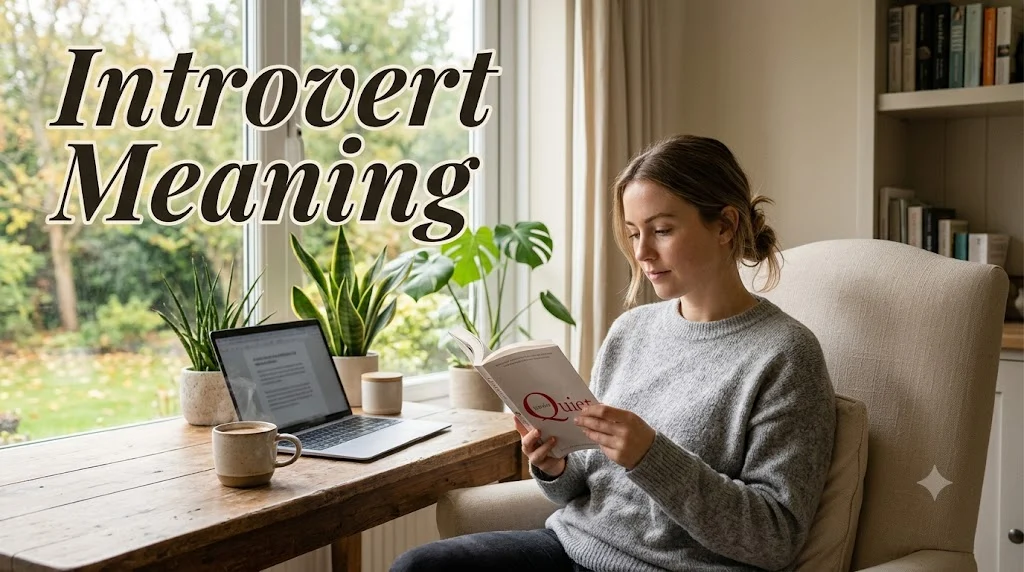
Have you ever heard someone say, “I’m an introvert,” and wondered what they really meant? Many people assume introverts are shy, quiet, or dislike being around others. However, that definition only tells part of the story.
The introvert meaning goes much deeper than simply preferring to stay home instead of attending a party. Introversion is a personality trait that influences how people gain energy, process information, communicate with others, and interact with the world around them.
Today, the word introvert appears everywhere—from psychology articles and workplace discussions to TikTok videos, Instagram captions, and personality quizzes. Unfortunately, many myths still surround this personality type, causing confusion about what being an introvert actually means.
In this guide, you’ll learn:
- The true meaning of introvert
- The psychology behind introversion
- Common personality traits
- How introverts behave in different situations
- Real-life examples
- Platform-specific usage
- Common misunderstandings
- Helpful communication tips
- Frequently asked questions
Whether you’re trying to understand yourself, a friend, family member, or coworker, this complete guide will help you understand introversion in a practical and relatable way.
Quick Answer Box
| Topic | Answer |
|---|---|
| Meaning | A person who gains energy from solitude or calm environments rather than frequent social interaction. |
| Context | Personality psychology, everyday conversations, workplaces, schools, and social media. |
| Common Usage | Describing personality preferences and social energy. |
| Platforms | TikTok, Instagram, Facebook, Reddit, LinkedIn, YouTube, WhatsApp, Snapchat, X (Twitter). |
| Example | “I’m an introvert, so I like quiet weekends after a busy workweek.” |
| Tone | Neutral, positive, and descriptive. |
What Does Introvert Mean?
The word introvert describes someone who naturally feels more energized by spending time alone or in peaceful settings than by constant social activity.
This doesn’t mean introverts dislike people. Instead, social interactions often require more mental energy for them than they do for extroverts.
For example:
- Reading a book may feel refreshing.
- Taking a quiet walk may reduce stress.
- Having coffee with one close friend may feel more enjoyable than attending a large party.
After spending several hours in a crowded environment, many introverts feel mentally tired and need quiet time to recharge.
This is one of the biggest differences between introverts and extroverts.
Full Definition
An introvert is someone whose personality naturally leans toward internal thoughts, reflection, and calm environments.
Rather than seeking constant external stimulation, introverts often enjoy activities that allow them to think deeply and focus without distractions.
Introversion is not a weakness.
It is not a disorder.
It is not a social problem.
Instead, it is one end of the personality spectrum.
Many psychologists describe introversion as a preference for lower levels of external stimulation.
Because of this preference, introverts often appreciate:
- Quiet places
- Meaningful conversations
- Independent work
- Creative hobbies
- Personal reflection
- Close friendships instead of large social circles
However, every introvert is different.
Some enjoy public speaking.
Others become excellent leaders.
Some love traveling.
Others enjoy attending concerts occasionally.
Personality exists on a spectrum rather than in fixed categories.
Why Do People Become Introverts?
Introversion isn’t something people simply choose.
Research suggests that personality develops through a combination of genetics, brain function, and life experiences.
Several factors may contribute:
Genetics
Many personality traits are inherited.
Children often show signs of introversion or extroversion from an early age.
Brain Activity
Studies suggest introverts may respond differently to stimulation than extroverts.
Busy environments can become mentally exhausting more quickly.
Therefore, quieter settings often feel more comfortable.
Environment
Life experiences also shape personality.
Family dynamics, education, friendships, and work experiences influence how people express introverted tendencies.
Common Traits of Introverts
Not every introvert shares the same characteristics. However, many display several common traits.
They Enjoy Solitude
Being alone isn’t lonely for most introverts.
Instead, alone time helps them relax and recover.
They Prefer Deep Conversations
Many introverts enjoy meaningful discussions rather than casual small talk.
For example, they may enjoy talking about ideas, books, goals, or personal experiences.
They Think Before Speaking
Instead of responding immediately, introverts often process information carefully.
As a result, their answers may feel thoughtful and well considered.
They Listen Carefully
Many introverts are excellent listeners.
Rather than dominating conversations, they pay attention and ask meaningful questions.
They Have Smaller Friend Groups
Introverts often value quality over quantity.
Instead of knowing hundreds of people, they build a few strong relationships.
They Need Time to Recharge
After busy events, meetings, or parties, introverts usually appreciate quiet time.
This isn’t rude.
It’s simply how they restore their mental energy.
Introvert vs. Shy
One of the biggest misunderstandings is believing introverts are automatically shy.
These terms describe different things.
| Introvert | Shy Person |
|---|---|
| Prefers quiet environments | Feels nervous in social situations |
| May enjoy socializing in moderation | May avoid socializing because of fear |
| Recharges alone | Worries about judgment |
| Personality trait | Emotional response |
Someone can be:
- Introverted but confident
- Introverted and outgoing
- Extroverted but shy
- Extroverted and confident
Therefore, introversion and shyness should never be treated as the same thing.
Why Introverts Are Often Misunderstood
Society often celebrates people who speak loudly, network constantly, and enjoy large gatherings.
Because of this, introverts may seem quiet or reserved by comparison.
However, quiet doesn’t mean:
- Unfriendly
- Unhappy
- Arrogant
- Bored
- Anti-social
Instead, many introverts simply observe before participating.
They often value listening more than speaking.
Additionally, they may need extra time before feeling comfortable in new environments.
Different Types of Introverts
Psychologists often describe several forms of introversion.
Social Introvert
These individuals prefer smaller gatherings and close friends.
Large crowds can become draining.
Thinking Introvert
Thinking introverts enjoy reflection, imagination, and creativity.
They often spend time analyzing ideas and solving problems internally.
Anxious Introvert
Some introverts experience discomfort in unfamiliar social situations.
However, anxiety does not define all introverts.
Restrained Introvert
These individuals prefer planning before acting.
They usually think carefully before making decisions or entering conversations.
Why Being an Introvert Can Be a Strength
Many successful people identify as introverts.
Their strengths often include:
- Deep focus
- Creativity
- Excellent listening
- Careful planning
- Emotional awareness
- Strong analytical thinking
- Independent problem-solving
- Meaningful relationship building
Because they think before acting, introverts often make thoughtful decisions.
Furthermore, they frequently excel in careers that require concentration and attention to detail.
Everyday Examples of Introversion
Example 1
Emma attends a wedding with friends.
She enjoys herself for several hours.
However, when she gets home, she spends the evening reading quietly.
That doesn’t mean she disliked the event.
She simply needs time to recharge.
Example 2
David works in a busy office.
During lunch, he chooses to eat outside alone.
His coworkers assume he’s upset.
Actually, he simply enjoys a peaceful break before returning to work.
Example 3
Sophia prefers having dinner with two close friends instead of attending a party with fifty people.
She enjoys meaningful conversations more than loud environments.
Example 4
Alex participates actively during meetings.
However, after work, he spends the evening at home watching documentaries and relaxing.
His quiet evening helps him recover from a busy day.
Example 5
Lily enjoys traveling.
Instead of joining crowded tours, she prefers exploring museums, parks, and local cafés at her own pace.
Her travel style reflects her personality rather than a dislike of people.
Context & Usage
Understanding the introvert meaning becomes much easier when you see how people use the word in everyday life. While psychologists use “introvert” to describe a personality preference, most people use it casually to explain their social habits, communication style, or energy levels.
The key point is that introvert describes how someone recharges, not whether they enjoy people.
For example, someone might enjoy attending a wedding, speaking at work, or traveling with friends. However, they may still need quiet time afterward to feel refreshed. Therefore, calling someone an introvert doesn’t mean they avoid social situations altogether.
People commonly use the term in conversations about:
- Personality
- Friendships
- Dating
- School
- College
- Workplace communication
- Mental wellness
- Social media
- Personal growth
Here are some natural examples:
- “I’m an introvert, so I need some quiet time after work.”
- “He’s an introvert but loves spending time with his close friends.”
- “She’s not rude—she’s just an introvert who prefers listening.”
- “I’m definitely more introverted than my sister.”
Because the word has become more widely understood, people often use it to explain preferences rather than limitations.
How People Use “Introvert” in Daily Life
At School
Students often describe themselves as introverts when they prefer independent study over group projects.
Example:
“I’d rather work on the project by myself because I focus better.”
At Work
Employees may explain why they enjoy quiet workspaces or flexible schedules.
Example:
“I’m an introvert, so I do my best work when I have uninterrupted time.”
In Friendships
Introverts usually value meaningful friendships over large social circles.
Example:
“I don’t have many friends, but I’m very close to the ones I do have.”
In Dating
People frequently mention introversion while describing their ideal partner or date.
Example:
“I’m an introvert, so I’d rather go hiking or have coffee than attend a crowded concert.”
During Family Gatherings
Family members sometimes misunderstand introverts because they spend time alone after social events.
Example:
“I’m just recharging for a bit. I’ll join everyone again later.”
Platform-Specific Meaning
Although the definition stays the same across the internet, different platforms emphasize different aspects of introversion.
TikTok
On TikTok, creators often post relatable videos about introvert life.
Popular themes include:
- Canceling plans
- Loving quiet weekends
- Feeling exhausted after parties
- Reading instead of clubbing
- Working from home
- Social battery memes
Example caption:
“When your social battery dies after one hour at the party. 😂 #Introvert”
These videos usually focus on humor and shared experiences.
Instagram users often mention introversion in captions, stories, and personal bios.
Examples:
- “Coffee, books, and quiet mornings.”
- “Proud introvert.”
- “Small circle. Big peace.”
- “Weekend plans: stay home.”
Many creators also share motivational content encouraging introverts to embrace their personalities instead of trying to change them.
People sometimes use the word while chatting with friends.
Example conversation:
Sarah: Want to come to the party tonight?
Emma: I think I’ll skip this one.
Sarah: Everything okay?
Emma: Yep! I’m just an introvert and need a quiet night.
Snapchat
On Snapchat, the term appears in private conversations or funny stories.
Example:
“Me pretending I didn’t see the group invite because I’m an introvert.”
Reddit contains thousands of discussions about introversion.
Common topics include:
- Career advice
- Relationships
- Mental health
- Remote work
- Social anxiety
- Friendships
- College life
Many users ask questions such as:
- “Can introverts become managers?”
- “How do introverts make friends?”
- “Is it normal to enjoy being alone?”
These discussions often help people realize they’re not alone in their experiences.
Professional discussions focus on the strengths of introverts in the workplace.
Topics include:
- Leadership
- Listening skills
- Productivity
- Deep work
- Communication
- Team collaboration
Example:
“Introverts often lead by listening carefully and making thoughtful decisions.”
Facebook users commonly share personality quizzes and inspirational quotes about introversion.
Examples include:
- “Being quiet doesn’t mean you have nothing to say.”
- “Introverts shine in their own way.”
X (formerly Twitter)
Posts on X are usually short, humorous, or relatable.
Examples:
“Weekend goal: avoid crowds.”
“Being an introvert doesn’t mean I don’t like people. I just like peace.”
YouTube
YouTube creators publish videos such as:
- Signs you’re an introvert
- Introvert vs extrovert
- Careers for introverts
- Dating advice for introverts
- Productivity tips
These videos often explain the science behind introversion while sharing practical advice.
Real-Life Conversation Examples
Here are five realistic conversations that show how people naturally use the word introvert.
Conversation Example 1: Friends Making Weekend Plans
Jake: We’re all going downtown tonight.
Emily: Thanks for inviting me, but I’m staying home.
Jake: Not feeling well?
Emily: No, I’m just an introvert. I need a quiet evening after a busy week.
Conversation Example 2: Office Discussion
Manager: Why do you like working from home?
Chris: I’m an introvert, so I concentrate better in a peaceful environment.
Manager: That makes sense.
Conversation Example 3: College Orientation
Student 1: You seem pretty quiet.
Student 2: I usually listen before I talk.
Student 1: So you’re an introvert?
Student 2: Pretty much, but I enjoy meeting new people once I’m comfortable.
Conversation Example 4: Family Dinner
Mom: Why are you sitting outside?
Alex: I just needed a little quiet after everyone arrived.
Mom: Oh, right—you recharge differently.
Alex: Exactly.
Conversation Example 5: Dating App Chat
Taylor: What’s your perfect weekend?
Jordan: Reading, hiking, and coffee with one friend.
Taylor: Sounds peaceful.
Jordan: I’m definitely an introvert.
Emotional Meaning of Introvert
Beyond its dictionary definition, the word introvert also carries emotional meaning.
For many people, it represents:
- Peace
- Reflection
- Authenticity
- Independence
- Emotional balance
- Self-awareness
However, some people mistakenly associate introversion with loneliness or insecurity. Fortunately, awareness has grown in recent years, and many now recognize introversion as a healthy personality preference rather than a flaw.
Because of this shift, more people feel comfortable identifying as introverts without worrying about negative stereotypes.
Alternative Meanings
Although introvert usually refers to a personality type, people sometimes use it more casually.
For example, someone might say:
“I’m feeling introverted today.”
In this context, they don’t necessarily mean they’re an introvert by personality. Instead, they mean they want a quiet day with minimal social interaction.
Similarly, someone may describe a temporary mood:
- “I’m not avoiding everyone—I just feel introverted today.”
Therefore, context matters.
Related Terms and NLP Variations
Search engines and AI systems recognize many related phrases connected to introvert meaning. Understanding these variations helps readers find the information they’re looking for.
Common Synonyms
- Reserved person
- Quiet person
- Reflective individual
- Thoughtful personality
- Private person
- Solitary personality (in some contexts)
Related Personality Terms
- Extrovert
- Ambivert
- Social introvert
- Quiet personality
- Independent thinker
- Reflective communicator
- Deep thinker
- Observer
Common Search Variations
People also search for:
- What is an introvert?
- Introvert definition
- Introvert personality
- Meaning of introvert
- Introvert characteristics
- Introvert traits
- Introvert vs extrovert
- Signs you’re an introvert
- Is being an introvert normal?
- Can introverts be social?
These related queries show that users are often looking for both a definition and practical guidance.
Introvert vs. Extrovert vs. Ambivert
Understanding introversion becomes easier when you compare it with other personality styles.
| Personality Type | Energy Source | Social Preference | Communication Style |
|---|---|---|---|
| Introvert | Solitude or calm environments | Small groups or meaningful conversations | Thoughtful and reflective |
| Extrovert | Social interaction and activity | Larger groups and frequent interaction | Expressive and outgoing |
| Ambivert | A balance of both | Depends on the situation | Flexible and adaptable |
Most people don’t fit perfectly into one category. Instead, personality exists on a spectrum, and many individuals display traits from more than one type depending on the situation.
How to Respond to an Introvert
If someone tells you they’re an introvert, the best response is to respect their personality rather than make assumptions. Introversion isn’t something that needs to be “fixed.” Instead, it’s simply one way people naturally interact with the world.
Here are practical ways to communicate effectively with introverts.
Respect Their Need for Quiet Time
Many introverts enjoy socializing, but they also need time alone to recharge. Therefore, don’t assume they are upset if they decline an invitation or leave a gathering early.
Supportive response:
“No problem. Let me know if you’d like to join us next time.”
Don’t Pressure Them to Talk Constantly
Some introverts prefer listening before speaking. Give them space to contribute naturally instead of putting them on the spot.
Instead of saying:
“Why are you so quiet?”
Try:
“I’d love to hear your thoughts when you’re ready.”
Appreciate Their Listening Skills
Introverts often pay close attention during conversations. They may not speak the most, but they frequently provide thoughtful insights.
Recognizing this strength helps create more balanced and respectful communication.
Include Them Without Pressure
Continue inviting introverts to events, even if they don’t always attend. Many appreciate being included, although they may choose quieter activities or smaller gatherings.
For example:
“We’re meeting for coffee this weekend if you’d like to come.”
This approach shows kindness without creating pressure.
Value Different Communication Styles
Not everyone enjoys brainstorming out loud or speaking first in meetings. Some introverts prefer time to think before sharing ideas.
Consequently, allowing written feedback or follow-up discussions often leads to valuable contributions.
Common Misinterpretations
Many misconceptions surround the word introvert. These myths can create unfair stereotypes and prevent people from understanding the personality accurately.
Misinterpretation #1: Introverts Hate People
Reality: Introverts usually enjoy spending time with people they know and trust. They simply prefer meaningful interactions over constant social activity.
Misinterpretation #2: Introverts Are Shy
Reality: Shyness involves fear of social judgment, while introversion relates to energy preferences. A confident public speaker can still be an introvert.
Misinterpretation #3: Introverts Don’t Like Leadership
Reality: Many successful leaders identify as introverts. They often lead by listening carefully, thinking strategically, and making thoughtful decisions.
Misinterpretation #4: Introverts Never Enjoy Parties
Reality: Many introverts enjoy parties, celebrations, and travel. However, they may need quiet time afterward to recharge.
Misinterpretation #5: Introverts Lack Confidence
Reality: Confidence and introversion are separate traits. An introvert can be highly confident while still preferring calm environments.
Misinterpretation #6: Introverts Don’t Have Friends
Reality: Introverts often have fewer friendships, but those relationships tend to be deep, meaningful, and long-lasting.
When NOT to Use the Term
Although “introvert” is a useful personality description, it’s important not to misuse it.
Don’t Use It as an Insult
Avoid statements like:
- “Stop being such an introvert.”
- “You’re too introverted.”
These comments suggest there’s something wrong with the person’s personality, which isn’t true.
Don’t Diagnose Someone
Only a person can truly describe their own personality.
Someone who appears quiet may simply be:
- Tired
- Focused
- New to the group
- Distracted
- Feeling unwell
Therefore, avoid labeling people based on one interaction.
Don’t Confuse Introversion with Mental Health Conditions
Being introverted doesn’t automatically mean someone has:
- Social anxiety
- Depression
- Low self-esteem
- Loneliness
Although these experiences can overlap, they are not the same thing.
Don’t Assume Every Quiet Person Is an Introvert
Some extroverts become quiet in unfamiliar situations. Likewise, some introverts become very talkative around close friends.
Personality is more complex than outward behavior alone.
Practical Usage Tips
If you’re using the word introvert in conversation or writing, these tips will help you use it accurately.
Use It as a Personality Preference
Correct:
“She’s an introvert who enjoys small gatherings.”
Not:
“She’s an introvert because she never talks.”
Avoid Negative Labels
Words such as “antisocial,” “boring,” or “unfriendly” don’t accurately describe introversion.
Choose respectful language instead.
Consider the Context
Remember that people behave differently depending on the situation.
For example, an introvert may:
- Lead a business meeting.
- Speak confidently at a conference.
- Teach a classroom.
- Perform on stage.
Afterward, they may simply need time alone to recharge.
Recognize the Spectrum
Few people are completely introverted or completely extroverted.
Many individuals show different personality traits depending on:
- Their mood
- The environment
- The people they’re with
- Their level of energy
This flexibility is perfectly normal.
FAQs
1. What is the simple meaning of introvert?
An introvert is someone who gains energy from spending time alone or in calm environments rather than from constant social interaction.
2. Is being an introvert the same as being shy?
No. Introversion is a personality preference, while shyness is the fear of social judgment or embarrassment.
3. Can introverts enjoy social events?
Yes. Many introverts enjoy parties, vacations, and group activities. However, they often need quiet time afterward to recharge.
4. Are introverts born or made?
Research suggests that genetics, brain function, and life experiences all contribute to personality development.
5. Can an introvert become more outgoing?
Yes. Many introverts develop excellent communication and leadership skills while still preferring peaceful environments.
6. What jobs are good for introverts?
Many introverts thrive in careers that value focus, creativity, and independent thinking, such as writing, software development, graphic design, engineering, accounting, research, education, healthcare, and data analysis.
7. Can introverts have lots of friends?
Yes. Some introverts have large social circles, although many prefer a smaller number of close, meaningful relationships.
8. What’s the difference between an introvert and an extrovert?
Introverts generally recharge through solitude, while extroverts often gain energy from social interaction. Neither personality type is better than the other.
9. Is introversion a weakness?
No. Introversion is a natural personality trait with many strengths, including thoughtful decision-making, active listening, creativity, and strong focus.
10. Can someone be both an introvert and an extrovert?
Many people identify as ambiverts, meaning they display both introverted and extroverted traits depending on the situation.
Conclusion
Understanding the introvert meaning goes beyond labeling someone as quiet or reserved. At its core, introversion describes how a person restores energy, processes experiences, and prefers to interact with others. While introverts often appreciate solitude and meaningful conversations, they can also be confident leaders, supportive friends, creative thinkers, and successful professionals.
Moreover, it’s important to separate facts from myths. Introverts do not necessarily dislike people, fear social situations, or lack confidence. Instead, they simply have different social and emotional needs than extroverts. Recognizing these differences encourages stronger relationships, better workplace communication, and greater respect for individual personalities.
Whether you’re learning about yourself or someone else, remember that introversion is neither a weakness nor a limitation. It’s a natural personality trait that brings valuable strengths such as deep thinking, careful listening, creativity, empathy, and focus. By understanding and appreciating these qualities, you can communicate more effectively and build more meaningful personal and professional connections.
If someone says, “I’m an introvert,” the best response is simple: understand, respect, and appreciate the unique way they experience the world.
Discover More Related Articles: