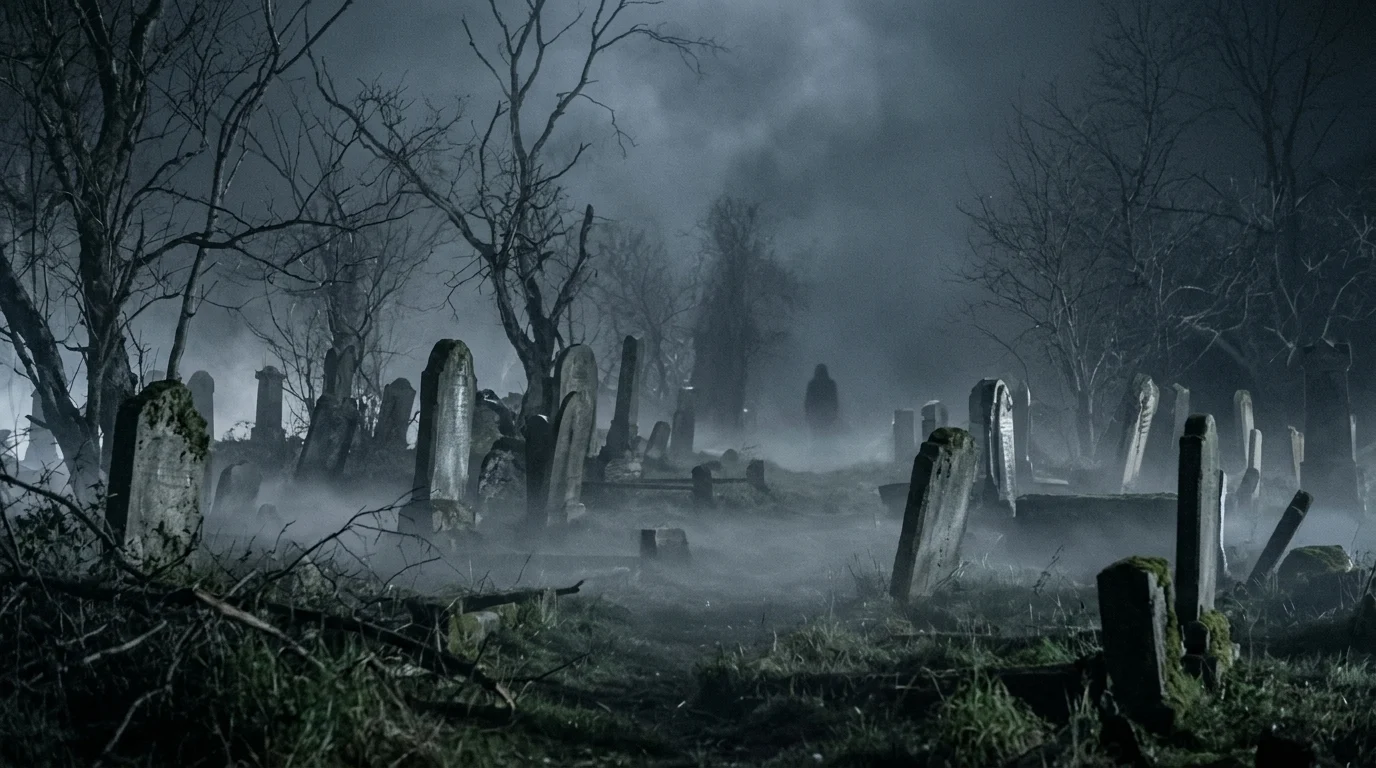
Quick Answer: Spook primarily means a ghost or apparition in informal usage. As a verb, it means to frighten or scare someone or something, often causing a sudden reaction. The word also carries slang meanings, including a term for a spy or undercover agent, and a historically derogatory racial slur that should be avoided.
Spook is a word that wears many masks. For most English speakers, it conjures images of Halloween ghosts and haunted houses. Yet the same word has served as Cold War slang for intelligence agents and, more troublingly, as a racial slur with a painful history. Understanding spook requires acknowledging all of these meanings without confusing one for another.
The term’s journey from a Dutch-derived word for ghost to a versatile piece of modern slang reveals how language adapts to cultural needs. Consequently, using spook correctly means knowing which meaning applies in which context—and which meanings are best left unused.
What Does Spook Mean?
At its most common, spook refers to a ghost, specter, or apparition. The Oxford English Dictionary dates this usage to 1801 and notes that it is often “somewhat jocular or colloquial”. Merriam-Webster’s learner definition confirms this informal tone, describing a spook as a ghost or scarecrow-like figure.
As a verb, spook means to scare or frighten. The verb form emerged later, with the OED tracing its earliest use to 1871. In American English, it is especially common when describing animals that startle easily. A horse can spook at a sudden noise; a cat can be spooked by a stranger. The word implies a sudden, reactive fear rather than deep, prolonged terror.
Pronunciation
British English: /spuːk/ (SPOOK)
U.S. English: /spuːk/ (SPOOK)
Word Origin
Spook entered American English in the early nineteenth century, likely borrowed from Dutch spook, which shares roots with Middle Low German spōk. The Oxford University Press blog notes that the word “surfaced in the nineteenth century in American English and is believed to be of Dutch origin”. Interestingly, the blog also observes that modern dictionaries “unanimously call the so-called ultimate origin of this group undiscovered,” meaning linguists still debate where the word ultimately came from.
Spook as a Ghost or Apparition
The ghost meaning remains the most familiar and least controversial. In everyday speech, calling something a spook is a lighthearted way to reference the supernatural. A “spook house” is a haunted house. A “spook story” is a ghost story. The word carries a playful, slightly old-fashioned quality that distinguishes it from more serious terms like “apparition” or “phantom.”
Spooky and Related Forms
The adjective spooky is far more common than the noun in casual conversation. “That old house looks spooky” is a standard English sentence. The adverb spookily and the noun spookiness follow naturally. These forms extend the ghostly meaning without invoking the word’s more problematic associations.
Spook as a Verb: Frightening and Startling
The verb form of spook has become arguably more common than the noun in contemporary usage, especially in American English. To spook someone is to frighten them, often suddenly. The implication is that the fear is reactive and immediate rather than carefully reasoned.
Spooking Animals
The most literal use of the verb applies to animals. A horse that spooks may bolt or throw its rider. A deer spooked by a hunter’s scent will flee. This usage emphasizes instinctive fear responses. Training guides for horse owners frequently discuss how to prevent a horse from spooking at common sights and sounds.
Spooking People and Markets
The verb has extended metaphorically to human situations. “The news spooked investors, and stock prices fell,” as one dictionary example illustrates. In this usage, spook means to cause sudden alarm that prompts a reaction—often a sell-off or withdrawal. The word appears regularly in financial journalism to describe market reactions to uncertainty.
A related usage describes someone who is easily frightened. “She doesn’t spook easily” means she remains calm under pressure. This usage is common in descriptions of people who work in high-stress environments, from emergency responders to military personnel.
Spook as Slang for a Spy
During the mid-twentieth century, spook acquired a new slang meaning: an undercover agent or spy. The OED dates this usage to 1942, with early citations referring to “spotters” employed to detect irregularities among workers. By the Cold War era, “spook” had become common Washington slang for intelligence operatives.
The spy meaning persists in journalism and popular culture. A thriller novel might feature a retired spook. A news article might describe intelligence agencies as employing thousands of spooks. This usage is informal but not derogatory—it carries a slightly admiring, knowing tone, as if the speaker is familiar with the shadowy world of espionage.
Why “Spook” for Spy?
The connection between ghosts and spies is metaphorical. Spies operate invisibly, appearing and disappearing without leaving traces. Like ghosts, they inhabit a world of secrecy and surveillance. The slang captures this quality of unseen presence and elusive identity.
The Derogatory Racial Slur
No responsible discussion of spook can omit its most troubling meaning. The OED records that by 1945, spook had become “a derogatory term for a black person”. The Free Dictionary explicitly labels this usage as “Offensive Slang”.
This meaning is rooted in dehumanizing stereotypes that associated Black people with ghosts, shadows, and invisibility. The slur has been used in racist contexts and carries the full weight of that history. Modern style guides and dictionaries flag it clearly as offensive and unacceptable.
Usage Guidance
The racial slur meaning should never be used. It causes real harm and reflects a history of racism that language users have a responsibility to acknowledge. When encountering spook in older texts, readers should be aware of this possible meaning. When writing or speaking today, the term should be reserved for its ghost, verb, or (in appropriate informal contexts) spy meanings.
How to Use Spook Correctly
As a Noun (Ghost)
Use spook informally to refer to a ghost or specter. “The old mansion is said to be haunted by a spook” is acceptable in casual writing. For formal contexts, “ghost” or “apparition” is preferable.
As a Verb (Frighten)
Use spook to describe sudden fear, especially in animals. “The loud noise spooked the dog” is a natural sentence. For human fear, it works best in informal or journalistic contexts: “The rumor spooked the market.”
As Slang (Spy)
Use spook informally when discussing intelligence agents. This usage is appropriate in journalism, casual conversation, and genre fiction. It should be avoided in formal government or diplomatic writing.
What to Avoid
- Never use spook as a racial slur. This meaning is offensive and harmful. No context justifies its use.
- Do not confuse spook with “spoke.” The two words sound similar but have entirely different meanings. A spook is a ghost; a spoke is part of a wheel or the past tense of “speak.”
- Be mindful of tone. Spook is informal. In academic or professional writing about the supernatural, “ghost” or “apparition” carries more weight.
Frequently Asked Questions
1. What is the simple definition of spook?
Spook most commonly means a ghost or apparition. As a verb, it means to frighten or scare, especially in a way that causes a sudden reaction.
2. Is spook an offensive word?
Spook has a historical meaning as a derogatory racial slur against Black people. This usage is offensive and should never be used. The ghost, verb, and spy meanings are not inherently offensive, though they are informal.
3. What does it mean when an animal is spooked?
When an animal is spooked, it has been suddenly frightened and may react instinctively—running away, bolting, or becoming agitated. Horse owners and pet owners frequently use the term this way.
4. Why are spies called spooks?
The slang usage likely arose from the idea that spies operate invisibly, like ghosts. The term became common in American English during the 1940s and Cold War era.
5. Where does the word spook come from?
Spook entered American English in the early 1800s, probably from Dutch. The ultimate origin remains uncertain, and linguists continue to debate its deeper roots.
6. Is spooky related to spook?
Yes. Spooky is the adjective form of spook, meaning ghostly or frightening. It is far more common in everyday speech than the noun spook itself.
Conclusion
Spook is a word of many meanings, some playful and some deeply problematic. Its primary sense—a ghost or apparition remains familiar and harmless. The verb form, meaning to frighten, has become a standard part of American English, especially in discussions of animal behavior and financial markets. Its slang use for spies persists in journalism and popular culture.
Yet the word also carries a racist history that cannot be ignored. Responsible usage means knowing all of these meanings and choosing carefully which ones to employ. Spook can be a useful word, but only when its full history is acknowledged.