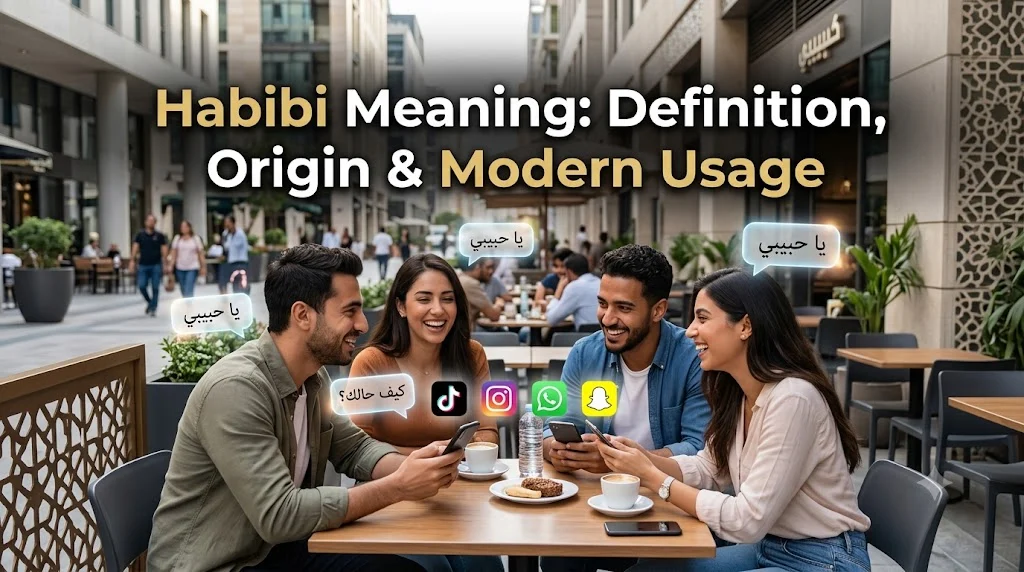
If you’ve spent time on TikTok, Instagram, Snapchat, YouTube, or even in online gaming communities, you’ve probably heard someone say “habibi.”
The word appears in viral videos, songs, funny memes, and casual conversations. As a result, many English speakers wonder what it really means and whether it always carries a romantic meaning.
The truth is more interesting than many people realize.
Although habibi literally translates to “my beloved” in Arabic, its everyday meaning depends on the relationship, situation, and tone of the conversation. Friends use it. Family members use it. Couples use it. Even strangers sometimes say it as a warm and polite expression.
In this guide, you’ll learn:
- The exact habibi meaning
- Where the word comes from
- How native Arabic speakers use it
- What it means on TikTok, Snapchat, Instagram, WhatsApp, and texting
- Real conversation examples
- When you should—and shouldn’t—use it
- Common misunderstandings
- Similar words and slang
By the end, you’ll understand not only the dictionary definition but also the cultural meaning behind one of the world’s most recognizable Arabic words.
Quick Answer Box
| Topic | Answer |
|---|---|
| Meaning | My beloved, my dear, my love, darling |
| Language | Arabic |
| Pronunciation | Ha-bee-bee |
| Romantic? | Sometimes, but not always |
| Friendly? | Yes, very commonly |
| Used On | TikTok, Instagram, Snapchat, WhatsApp, texting, gaming, music |
| Tone | Warm, affectionate, friendly, caring |
| Example | “Thanks for helping me, habibi!” |
What Does “Habibi” Mean?
The simplest definition is:
Habibi means “my beloved,” “my dear,” “my love,” or “darling.”
However, language rarely stays that simple. The meaning changes depending on who is speaking and whom they’re addressing.
For example:
- A husband may call his wife habibi.
- A mother may call her son habibi.
- Two close friends may greet each other with habibi.
- A shop owner may warmly welcome a customer by saying habibi.
- Someone joking online may use it to sound playful or friendly.
Therefore, the same word can express romance, friendship, kindness, respect, or simple affection.
Unlike many English terms of endearment, habibi has a much broader everyday use in Arabic-speaking cultures.
Full Definition of Habibi
The Arabic word حبيبي (habibi) comes from the root حب (ḥubb), which means love.
Breaking it down:
- Habib (حبيب) = beloved
- Habibi (حبيبي) = my beloved
The ending “-i” means “my.”
So the literal translation becomes:
My beloved
However, depending on context, English speakers may translate it as:
- My dear
- My friend
- Darling
- Sweetheart
- Honey
- Love
- Dear one
- Buddy (in casual situations)
Each translation captures only part of the meaning because Arabic expressions often carry emotional warmth that doesn’t always have a perfect English equivalent.
The Origin of the Word “Habibi”
The word has existed for centuries in the Arabic language.
It appears in:
- Classical Arabic literature
- Traditional poetry
- Folk songs
- Religious writings
- Modern Arabic novels
- Popular music
- Everyday speech
Because Arabic is spoken across more than twenty countries, millions of people use habibi daily.
Over time, globalization introduced the word to audiences around the world. International travel, music, movies, social media, and streaming platforms all helped spread its popularity.
Today, even people who don’t speak Arabic recognize the word.
Why Has “Habibi” Become So Popular?
Several factors explain its worldwide popularity.
Music
Many Arabic singers use habibi in romantic songs.
International artists have also included the word in pop, rap, and dance music. Consequently, millions of listeners became familiar with it without speaking Arabic.
Social Media
TikTok creators often use habibi in:
- Comedy videos
- Relationship skits
- Travel content
- Lifestyle clips
- Voiceovers
- Viral memes
As a result, the word feels trendy to younger audiences.
Gaming Communities
Online gamers frequently greet teammates with:
- Habibi
- My habibi
- Habibi let’s go!
- Come here habibi!
In these cases, the word usually expresses friendliness rather than romance.
Global Culture
Arabic expressions have entered mainstream culture through travel, sports, fashion, food, and entertainment. Therefore, habibi has become one of the most recognized Arabic words worldwide.
Is “Habibi” Romantic?
One of the biggest misconceptions is that habibi always means boyfriend or girlfriend.
That isn’t true.
Its meaning depends entirely on context.
Between Couples
In romantic relationships, habibi often means:
- My love
- Darling
- Sweetheart
- Babe
Example:
Sara: I missed you today.
Omar: I missed you too, habibi.
Here, the word clearly expresses romantic affection.
Between Friends
Friends also say habibi regularly.
Example:
Alex: Thanks for helping me move.
Yousef: Anytime, habibi.
In this situation, the word simply means:
- My friend
- Buddy
- Bro
- Dear friend
There is no romantic implication.
Between Family Members
Parents often use habibi with children.
Grandparents use it.
Older siblings use it.
Aunties and uncles use it.
For example:
Mother: Habibi, dinner is ready.
The word simply expresses love and care.
Between Strangers
In many Arabic-speaking countries, shopkeepers, taxi drivers, restaurant owners, and hotel staff may warmly greet customers with:
“Welcome, habibi.”
They aren’t flirting.
Instead, they’re showing hospitality and friendliness.
Habibi vs. Habibti
Many people notice two similar words:
- Habibi
- Habibti
The difference is grammatical.
Habibi
Used when speaking to a male.
Meaning:
“My dear.”
“My beloved.”
“My love.”
Example:
“Come here, habibi.”
Habibti
Used when speaking to a female.
Meaning:
“My dear.”
“My beloved.”
“My love.”
Example:
“You look amazing, habibti.”
Although many non-Arabic speakers use habibi for everyone, native speakers generally choose the appropriate form based on gender.
How Native Arabic Speakers Actually Use Habibi
One reason learners become confused is that dictionaries often define habibi as “my love.”
While technically correct, that definition doesn’t reflect daily speech.
Native speakers use the word far more casually.
For example, imagine someone drops their wallet.
A stranger might say:
“Habibi, you forgot this.”
Nobody assumes romance.
Instead, the speaker simply sounds kind and respectful.
Similarly, a waiter may ask:
“What would you like, habibi?”
Again, this reflects warmth and hospitality rather than affection.
Because Arabic culture often values close interpersonal relationships and welcoming language, words like habibi naturally appear in everyday conversations.
Emotional Meaning Behind Habibi
Beyond its literal translation, habibi carries emotional warmth.
Depending on tone, it can express:
Affection
It tells someone they matter.
Kindness
It softens conversations.
Respect
It creates a friendly atmosphere.
Encouragement
People often use it while comforting someone.
Example:
“Don’t worry, habibi. Everything will be okay.”
Gratitude
Someone may respond:
“Thank you, habibi.”
Here, the word makes appreciation sound warmer and more personal.
Why English Doesn’t Have a Perfect Translation
English offers many affectionate expressions:
- Honey
- Dear
- Darling
- Sweetheart
- Love
- Buddy
- Friend
However, none matches every situation where Arabic speakers use habibi.
For example:
A cashier saying “Thanks, sweetheart” may sound unusual in some parts of the United States.
Meanwhile, saying “Thanks, habibi” sounds perfectly natural in many Arabic-speaking communities.
Therefore, translators often leave the original word unchanged because it preserves the intended emotional tone.
Common Situations Where You’ll Hear “Habibi”
You may encounter the word in many everyday situations, including:
- Greeting friends
- Thanking someone
- Comforting a loved one
- Romantic conversations
- Family gatherings
- Restaurants
- Markets
- Taxi rides
- Online games
- TikTok videos
- Instagram captions
- Snapchat messages
- YouTube comments
- Viral memes
- Music lyrics
Its flexibility explains why the word has become so recognizable around the world.
Context & Usage
Understanding habibi meaning becomes much easier when you look at the situation instead of translating the word literally. The same expression can sound romantic, friendly, respectful, or playful depending on who says it and how they say it.
Think of it like the English words “dear,” “love,” or “buddy.” Their meaning changes based on the relationship between the speakers.
Between Romantic Partners
Among couples, habibi is one of the most common terms of endearment.
It expresses:
- Love
- Affection
- Emotional closeness
- Care
- Appreciation
Examples
- “Good morning, habibi.”
- “I miss you, habibi.”
- “Sleep well, habibi.”
- “I’m proud of you, habibi.”
In these situations, the meaning is closest to:
- My love
- Darling
- Sweetheart
- Babe
Between Friends
Close friends often use habibi casually.
Here, the word doesn’t suggest romance. Instead, it creates a warm and friendly atmosphere.
Examples include:
- “Thanks, habibi!”
- “You’re the best, habibi.”
- “Let’s grab dinner, habibi.”
- “Good luck today, habibi.”
Many bilingual speakers switch naturally between English and Arabic.
For example:
“Bro, you’re late again, habibi!”
The sentence mixes languages but sounds completely natural in many communities.
Between Family Members
Parents frequently call their children habibi.
Grandparents do the same.
Older siblings also use it with younger brothers or sisters.
Examples include:
- “Habibi, finish your homework.”
- “Come eat, habibi.”
- “Drive safely, habibi.”
- “Congratulations, habibi!”
The word communicates warmth, encouragement, and unconditional love.
In Customer Service
Visitors to Middle Eastern countries often notice shopkeepers saying:
- “Come in, habibi!”
- “Welcome, habibi!”
- “How can I help you, habibi?”
This isn’t flirting.
Instead, it’s a friendly way to make customers feel welcome.
In Humor
Online creators often exaggerate the word for comedy.
For example:
“Habibi, what are you doing?”
The phrase has become a meme because it sounds instantly recognizable and expressive.
Real-Life Conversation Examples
Conversation Example 1: Friends
Ahmed: Thanks for picking me up.
Ryan: Anytime, habibi.
Meaning: You’re welcome, my friend.
Conversation Example 2: Couple
Emma: I missed you today.
Omar: I missed you too, habibi.
Meaning: My love.
Conversation Example 3: Parent and Child
Mom: Habibi, dinner is ready.
Son: I’ll be there in a minute.
Meaning: My dear.
Conversation Example 4: Gaming
Player 1: Nice shot!
Player 2: Thanks, habibi!
Meaning: Friendly appreciation.
Conversation Example 5: Shopping
Customer: Thank you.
Shopkeeper: You’re welcome, habibi.
Meaning: Polite friendliness.
Platform-Specific Meaning
TikTok
TikTok helped introduce habibi to millions of people worldwide.
Creators use it in:
- Comedy videos
- Couple content
- Lifestyle vlogs
- Travel videos
- Dance edits
- Arabic culture videos
- Voiceovers
- Memes
Many videos use dramatic audio saying:
“Habibi…”
The word adds emotion and often makes the video feel more expressive.
Sometimes creators even use it ironically for humor.
Example:
“When your friend says they’ll be ready in five minutes… Habibi, it’s been an hour.”
Snapchat
On Snapchat, habibi usually appears in private chats.
Examples:
- Good morning, habibi ❤️
- Thanks, habibi.
- Miss you, habibi.
- You’re funny, habibi 😂
Depending on the sender, it may mean:
- Best friend
- Crush
- Partner
- Family member
The relationship determines the meaning.
Instagram users often include habibi in:
- Captions
- Comments
- Stories
- Reels
- DMs
Examples:
- My habibi ❤️
- Traveling with my habibi.
- Happy birthday, habibi!
- Looking good, habibi.
Influencers also use the word because it’s short, memorable, and widely recognized.
On WhatsApp, conversations often sound more personal.
Examples include:
- Morning, habibi.
- Have a safe flight, habibi.
- Call me later, habibi.
- Thank you, habibi.
Family groups commonly use the word every day.
Text Messages
Text conversations frequently include:
- Thanks, habibi.
- Love you, habibi.
- You’re amazing, habibi.
- See you tomorrow, habibi.
The tone depends entirely on who sends the message.
Gaming
Gamers sometimes use habibi jokingly.
Examples:
- Let’s win this, habibi!
- Follow me, habibi!
- Nice clutch, habibi!
- Good game, habibi!
Here, it works almost like:
- Bro
- Buddy
- Friend
Dating Apps
People occasionally use habibi on dating apps.
Examples:
- Hi, habibi.
- Good evening, habibi.
- You look beautiful, habibti.
Because dating already involves romantic interest, the word usually carries romantic meaning in this setting.
Alternative Meanings
Although dictionaries define habibi as my beloved, everyday conversations create several shades of meaning.
Depending on context, it may mean:
- My dear
- My love
- Darling
- Sweetheart
- Honey
- Dear friend
- Buddy
- Bestie
- My favorite person
- Someone I care about
Native speakers understand the intended meaning from tone, facial expressions, and context.
Related Terms & NLP Variations
People searching for habibi meaning also look for related words and spellings.
Habib
Means:
Beloved
Without the “my” ending.
Habibti
Used when speaking to a female.
Meaning:
My beloved (female).
Habib
Sometimes used as a personal name.
Many people around the world are named Habib, and the name itself means “beloved.”
Habibi
This spelling appears frequently online.
Although the spelling changes slightly, the pronunciation and meaning remain the same.
Ya Habibi
One of the most famous Arabic expressions.
Ya works like calling someone’s attention.
Meaning:
- Oh my dear
- My beloved
- Dear friend
You’ll hear this phrase often in Arabic songs and movies.
Ya Habibti
The feminine version.
Meaning:
Oh my dear (female).
Habibo
Some regions and online communities use playful variations such as Habibo, especially among friends. It’s informal and less common than Habibi.
Similar Words
If you’re learning Arabic or exploring Middle Eastern culture, you may also encounter these affectionate expressions:
| Word | Meaning |
|---|---|
| Habibi | My beloved (male) |
| Habibti | My beloved (female) |
| Aziz | Dear, precious |
| Azizti | Dear (female) |
| Rouhi | My soul |
| Omri | My life |
| Albi/Qalbi | My heart |
These expressions all convey affection, but each carries a slightly different emotional tone.
Why English Speakers Love the Word
Many non-Arabic speakers have adopted habibi because it feels:
- Warm
- Friendly
- Unique
- Easy to pronounce
- Universally positive
In addition, music, travel, sports, and social media have made the word familiar across many cultures.
For many people, saying “habibi” feels more expressive than simply saying “friend” or “dear.”
How to Respond When Someone Calls You “Habibi”
If someone calls you habibi, your response should match the relationship and the situation. In many cases, a simple smile or friendly reply is enough. However, the best response depends on whether the conversation is romantic, casual, or professional.
In a Friendly Conversation
When a friend says, “Thanks, habibi,” you can reply naturally with:
- “You’re welcome!”
- “Anytime!”
- “Of course!”
- “No problem, habibi!”
- “Happy to help!”
Returning the word is common among close friends, especially if both people are comfortable using Arabic expressions.
In a Romantic Relationship
Couples often reply with the same level of affection.
Example
Alex: Good night, habibi.
Sam: Good night, habibi. Sleep well!
The exchange feels warm and natural because both people share the same emotional connection.
In a Family Setting
Parents, grandparents, and relatives often use habibi affectionately.
Example:
Mother: Habibi, don’t forget your jacket.
Son: Thanks, Mom!
There’s no need for a special reply. Simply responding politely is perfectly normal.
If You’re Not Familiar With the Word
If someone calls you habibi and you’re unsure what they mean, you can politely ask:
- “What does habibi mean?”
- “Is that a compliment?”
- “Thanks! I’ve heard that word before.”
Most people will happily explain that it’s a friendly Arabic expression.
Common Misinterpretations
Because habibi has become popular online, people sometimes misunderstand its meaning. Here are some of the most common myths.
Myth 1: It Always Means “Boyfriend” or “Girlfriend”
Reality: No. While couples use habibi, so do friends, family members, and even strangers in friendly settings.
Myth 2: Only Men Can Say “Habibi”
Reality: Anyone can say habibi. The word isn’t limited to men. However, the form changes depending on the gender of the person being addressed:
- Habibi → addressing a male
- Habibti → addressing a female
Myth 3: It’s Only Used in the Middle East
Reality: The word originated in Arabic-speaking countries, but today it’s recognized worldwide. You’ll hear it in Europe, North America, Australia, and many multicultural communities.
Myth 4: It’s Only for Romantic Relationships
Reality: Not at all. Many Arabic speakers use habibi dozens of times a day with friends, relatives, coworkers, or customers.
Myth 5: It’s Internet Slang
Reality: Although social media made it more popular globally, habibi is a traditional Arabic word that has existed for centuries.
When NOT to Use “Habibi”
Even though habibi is friendly, there are situations where another expression may be more appropriate.
Formal Business Meetings
Avoid calling a new client or senior executive habibi unless you know it’s culturally acceptable.
Professional alternatives include:
- Hello
- Sir
- Ma’am
- Mr.
- Ms.
Academic or Professional Writing
You wouldn’t normally write:
Dear Habibi,
Instead, use standard greetings such as:
- Dear Professor,
- Dear Dr. Smith,
- Dear Hiring Manager,
With Someone Who May Feel Uncomfortable
If you don’t know someone well, they may misunderstand the word.
When in doubt, keep your language respectful and neutral.
Across Different Cultures
Not everyone understands Arabic expressions. Therefore, consider your audience before using habibi, especially in international business or formal communication.
Usage Tips
If you’d like to use habibi naturally, keep these tips in mind.
Understand the Context
Always think about your relationship with the other person. Context determines the meaning.
Match the Tone
A playful conversation allows for casual language, while a formal meeting usually doesn’t.
Learn the Correct Form
Remember:
- Habibi → speaking to a male
- Habibti → speaking to a female
Using the correct form shows cultural awareness.
Don’t Overuse It
Like any affectionate word, habibi has the greatest impact when used naturally. Repeating it in every sentence may sound forced.
Respect Cultural Differences
Although many people appreciate the expression, others may prefer more neutral language. Pay attention to personal preferences and cultural expectations.
Why “Habibi” Continues to Trend Online
The popularity of habibi keeps growing because it combines emotional warmth with cultural richness. It also fits naturally into short-form content, making it ideal for modern social media.
Some reasons it continues to trend include:
- It’s easy to pronounce.
- It has a positive meaning.
- It appears in popular songs.
- Influencers use it regularly.
- It’s memorable and expressive.
- It crosses language barriers.
- It works in both serious and humorous contexts.
As online communities become more global, words like habibi help people connect across cultures.
FAQs
1. What does habibi mean in English?
It usually means “my beloved,” “my dear,” “my love,” or “darling.” The exact meaning depends on the context.
2. Is habibi romantic?
Sometimes. Couples often use it romantically, but friends, family members, and even strangers may also use it as a warm, friendly expression.
3. What is the difference between habibi and habibti?
Habibi is generally used when addressing a male, while habibti is used when addressing a female.
4. Can non-Arabic speakers say habibi?
Yes. Many non-Arabic speakers use the word respectfully. However, understanding its cultural meaning helps you use it appropriately.
5. Why do people say “Ya Habibi”?
The word “Ya” is a way of calling someone’s attention. “Ya Habibi” means something like “Oh, my dear” or “My beloved.”
6. Is habibi a compliment?
Yes. In most situations, it’s a kind and affectionate expression that shows warmth, appreciation, or closeness.
7. Why is habibi popular on TikTok?
TikTok creators use the word in music, comedy, travel videos, relationship content, and memes. Its emotional tone makes it memorable and engaging.
8. Can I call my best friend habibi?
Yes, if your friend understands the meaning and is comfortable with it. Many close friends use the word affectionately.
9. Does habibi mean “bro”?
Not literally. However, among close friends, it can carry a similar friendly feeling to words like “bro,” “buddy,” or “mate.”
10. Is habibi offensive?
No. It’s generally considered a positive and respectful term of endearment. As with any expression, use it thoughtfully and consider the setting.
Conclusion
The true habibi meaning goes far beyond a simple dictionary translation. While it literally means “my beloved,” the word represents warmth, kindness, affection, and human connection. Depending on the context, it can express romantic love, close friendship, family care, or simple hospitality.
Today, habibi has become a global expression thanks to music, travel, and social media platforms like TikTok, Instagram, Snapchat, and WhatsApp. Even people who don’t speak Arabic recognize it as a positive and welcoming word.
If someone calls you habibi, it’s usually a sign of friendliness or affection. Likewise, if you choose to use the word, understanding its cultural background and appropriate context will help you communicate with confidence and respect.
Whether you’re learning Arabic, exploring internet slang, or simply curious about a word you’ve heard online, habibi is a beautiful reminder that language has the power to bring people together.
Discover More Related Articles: