Quick Answer: The red ribbon is the internationally recognized symbol for HIV/AIDS awareness, showing solidarity with people living with HIV and remembering those who have died from AIDS-related illnesses. It also represents drug abuse prevention during Red Ribbon Week in the United States, and appears in tattoo art as a mark of personal loss or survival.
The red ribbon is one of the most successful awareness symbols ever created. A simple loop of colored fabric, it manages to communicate compassion, grief, solidarity, and a demand for change—all without a single word. Its power lies in its simplicity and its refusal to be trademarked, allowing anyone anywhere to make and wear one.
Understanding the red ribbon requires looking at its dual history. On one hand, it emerged from the AIDS crisis of the early 1990s as a radical act of visibility. On the other, it became tied to a American anti-drug campaign with entirely different origins. Both meanings coexist today, and context determines which one a ribbon is meant to convey.
What Does a Red Ribbon Mean?
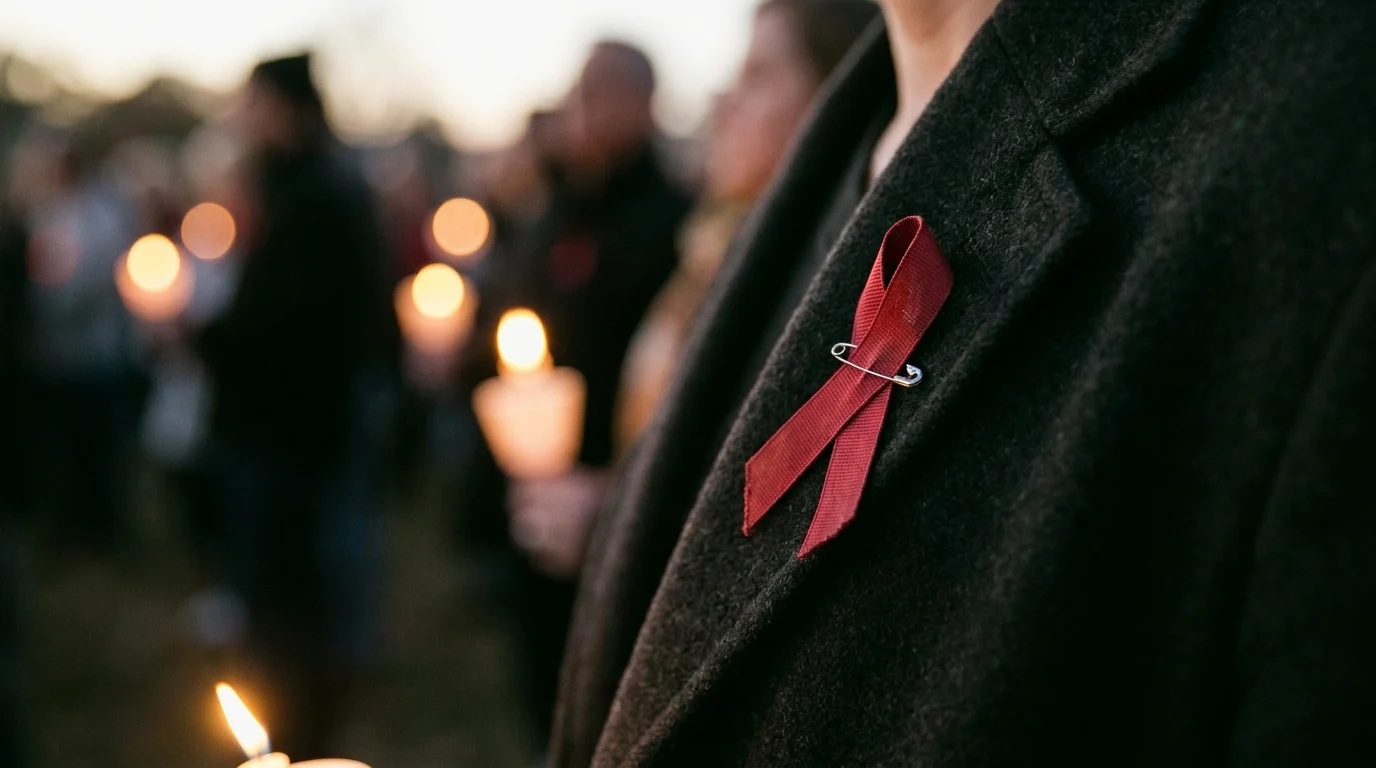
At its most globally recognized level, the red ribbon symbolizes HIV/AIDS awareness and solidarity. UNAIDS describes it as an internationally recognized symbol worn by people throughout the year in support of people living with HIV and in remembrance of those who have died . The Red Ribbon Centre in Hong Kong echoes this, stating that wearing one shows “Care and Concern for those living with HIV/AIDS” .
A secondary meaning exists within the United States: the red ribbon represents commitment to a drug-free lifestyle during Red Ribbon Week, held each October 23–31 . This campaign began after the 1985 murder of DEA Special Agent Enrique “Kiki” Camarena in Mexico, with communities wearing red ribbons to honor his sacrifice and oppose drug abuse .
Beyond these two official meanings, the red ribbon appears in tattoo art, where it can signify HIV/AIDS awareness, heart disease awareness, or substance abuse recovery .
Origins of the AIDS Ribbon
The AIDS red ribbon was created in 1991 by a group of New York artists affiliated with Visual AIDS, an organization founded in 1988 in response to the epidemic’s impact on the arts community . Inspired by yellow ribbons honoring soldiers in the Gulf War, the artists chose red for its connection to blood and passion—”not only anger, but love, like a valentine” . Crucially, the design was never copyrighted, allowing it to spread freely as a consciousness-raising tool rather than a commercial product .
The AIDS Red Ribbon: A History of Visibility
The ribbon’s public debut came at the 1991 Tony Awards, when actor Jeremy Irons wore one on national television . Its mass adoption in Europe followed at the Freddie Mercury AIDS Awareness Tribute Concert at Wembley Stadium in 1992, where over 100,000 ribbons were distributed to attendees . Princess Diana’s high-profile support throughout the 1990s further cemented the ribbon’s visibility .
The choice of red was deliberate. The artists behind the project wanted to convey that HIV was relevant to everyone, not just the gay community. They purposefully avoided pink and rainbow colors because of their close association with gay identity . Red—bold, visible, and connected to blood—was universal.
A Symbol of Compassion, Not Judgment
The ribbon was designed as an individual expression of compassion, not a government or institutional campaign . Visual AIDS artists distributed the first ribbons themselves, dropping them off at theaters and art spaces with explanatory notes. Once the meaning became widely known, the notes were abandoned. Today, the ribbon remains uncopyrighted and can be made by anyone with a safety pin and a scrap of red fabric .
Red Ribbon Week: The American Anti-Drug Campaign
In the United States, the red ribbon carries a different primary association. Red Ribbon Week, organized by the National Family Partnership, began as a response to the murder of DEA agent Enrique Camarena . Camarena was kidnapped, tortured, and killed in Mexico in 1985 while investigating drug traffickers . His hometown of Calexico, California, began wearing red ribbons in his memory, and the gesture spread .
The first official Red Ribbon Week was held in 1988 . Since then, it has become an annual observance each October, with schools and communities using the ribbon to promote drug-free lifestyles and prevention education . While this meaning is distinct from the AIDS ribbon, the symbol itself is the same: a red loop worn as a public statement.
Red Ribbon Tattoos: Personal Meanings
In tattoo culture, the red ribbon carries meanings that overlap with both awareness campaigns but often become deeply personal. A red ribbon tattoo can signify HIV/AIDS awareness, but it may also represent heart disease awareness or substance abuse recovery . The ribbon format is adaptable: names, dates, and flowers can be incorporated to memorialize a specific person, while a clean standalone ribbon often signals personal survival .
Some wearers also connect the red ribbon to the “red thread of fate,” an Eastern legend about destined connections between people . This interpretation is separate from the awareness campaign but shows how the symbol continues to accumulate meanings across cultures.
How to Interpret a Red Ribbon Today
Because the red ribbon has multiple established meanings, context is everything. A ribbon pinned to a lapel on December 1 (World AIDS Day) almost certainly signals HIV/AIDS solidarity. A ribbon displayed in a school hallway in late October likely relates to Red Ribbon Week and drug prevention. A tattoo requires more interpretation—it could honor a lost loved one, mark a personal health struggle, or express support for a cause.
World AIDS Day
December 1 is the focal point for the AIDS red ribbon’s visibility. UNAIDS encourages people worldwide to wear ribbons on this day to challenge stigma and prejudice surrounding HIV . The ribbon can be worn any day of the year, but World AIDS Day provides a collective moment of recognition .
Frequently Asked Questions
1. What is the primary meaning of a red ribbon?
The red ribbon is internationally recognized as the symbol for HIV/AIDS awareness, showing solidarity with people living with HIV and remembering those who have died .
2. What is Red Ribbon Week?
Red Ribbon Week is an American annual observance held October 23–31 that promotes drug-free lifestyles. It began in memory of DEA agent Enrique Camarena, who was killed by drug traffickers in 1985 .
3. Why is the AIDS ribbon red?
The artists who created it chose red for its connection to blood and passion—”not only anger, but love, like a valentine” . Red was also chosen to be bold and visible, and to avoid the gay-specific associations of pink and rainbow colors .
4. Can anyone wear a red ribbon?
Yes. The AIDS ribbon was deliberately created without copyright so anyone could make and wear one. UNAIDS and other organizations encourage wearing it to show support and challenge stigma .
5. What does a red ribbon tattoo mean?
It can signify HIV/AIDS awareness, heart disease awareness, or substance abuse recovery . Many people choose it as a memorial for a loved one or a mark of personal survival.
6. Are the AIDS ribbon and Red Ribbon Week the same thing?
No. They share the same symbol but have entirely different origins. The AIDS ribbon was created by New York artists in 1991. Red Ribbon Week began in 1988 to honor a slain DEA agent and promote drug prevention .
Conclusion
The red ribbon’s meaning depends on where you encounter it. On a lapel in December, it speaks of AIDS solidarity and the fight against stigma. In a school hallway in October, it signals a commitment to drug prevention. On skin, it may carry a personal story of loss or survival. What unites these meanings is the ribbon’s fundamental purpose: to make something visible that might otherwise be ignored.
Whether pinned, printed, or tattooed, the red ribbon asks the wearer and the observer to acknowledge pain, support survival, and remember the dead. Its simplicity is its strength. A loop of red fabric can say what words often cannot.