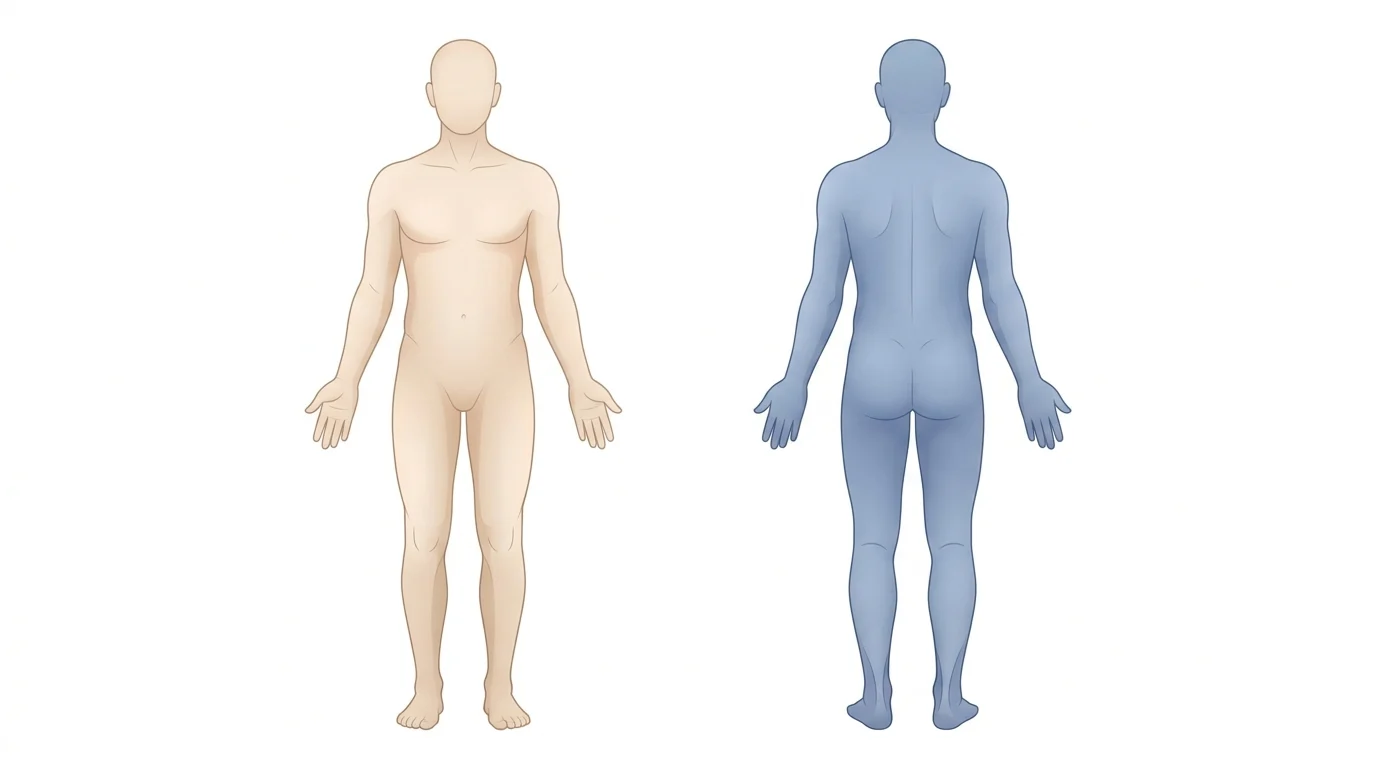
Quick Ans: The word posterior means “located at or toward the back” of something. In everyday English, people use it most often as an adjective to describe the back part of the body or a structure. As a noun, it serves as a slightly humorous way to refer to the buttocks. In medical and anatomical contexts, posterior functions as a precise directional term that helps describe where one structure sits relative to another.
The term comes from Latin and has appeared in English since the early 1500s. Its core idea is simple: posterior points toward the back. However, its meaning shifts slightly depending on whether you are reading an anatomy textbook, listening to a doctor describe a scan, or hearing someone make a playful remark about sitting down.
Table of Contents
- What Does Posterior Mean?
- Posterior in Anatomy and Medicine
- Posterior as a Noun: The Everyday Meaning
- Posterior vs. Anterior: Understanding the Pair
- Posterior in Other Contexts
- How to Use Posterior Correctly
- Frequently Asked Questions
What Does Posterior Mean?
At its most basic, posterior describes a position toward the rear or back of a body or object. Merriam-Webster’s learner definition puts it simply: “near or toward the back of something (such as the body).” The National Cancer Institute’s glossary offers a similar explanation for human anatomy: it “has to do with the back of a structure, or a structure found toward the back of the body.”
The word can also carry a temporal meaning. In more formal or literary English, posterior can mean “coming at a subsequent time or stage.” This usage is less common in everyday speech, but it appears in older texts and formal writing. When used this way, posterior is roughly synonymous with “later” or “subsequent.”
Pronunciation
British English: /pɒˈstɪəriə/ (poss-TEER-ee-uh)
U.S. English: /pɑˈstɪriər/ or /poʊˈstɪriər/ (pah-STEER-ee-uhr or poh-STEER-ee-uhr)
Word Origin
Posterior is a borrowing from Latin. The Oxford English Dictionary traces it to the Latin words posterior, posterius, and posteriora. Its earliest known use in English dates to 1509. The Latin root is related to post, meaning “after” or “behind,” which also appears in English words like postscript and postpone.
Posterior in Anatomy and Medicine
In anatomy, posterior is one of the standard directional terms used to describe location. It indicates that a structure is closer to the back of the body or toward the spine. For quadrupeds, the same term refers to the hind end of the animal.
This usage is not casual or approximate. Medical professionals rely on precise directional language to communicate about the body. When a radiologist reports that a mass is “posterior to the kidney,” the word specifies a location relative to a known landmark. When a surgeon describes a “posterior approach,” the term identifies which side of the body the procedure will enter from.
Examples of Posterior in Medical Contexts
- Posterior tibial artery: an artery running along the back of the lower leg.
- Posterior cruciate ligament (PCL): one of the major ligaments in the knee, located toward the back of the joint.
- Posterior pituitary: the back portion of the pituitary gland.
- Posterior fossa: a compartment at the back of the skull.
In these examples, posterior does not mean “behind” in a vague sense. It means specifically toward the back surface or the dorsal side of the body.
Related Terms
Medical ontologies list dorsal and dorsum as related concepts. Dorsal is another term for the back side, especially in anatomy. While posterior and dorsal overlap significantly, they are not always interchangeable in every context. Posterior is more general and can describe position along an axis, while dorsal often refers more specifically to the back surface.
Posterior as a Noun: The Everyday Meaning
When used as a noun, posterior refers to the buttocks. Merriam-Webster labels this usage as “humorous,” reflecting its tone in everyday speech. It is a polite or slightly playful way to refer to the part of the body you sit on, avoiding more direct or informal words.
This usage is common enough that dictionaries in other languages also record it. A Malay-English dictionary, for example, lists “posterior” as a noun meaning “buttocks” with a humorous label. The tone matters: saying “his posterior” is generally softer and more polite than cruder alternatives, but it still carries a light, informal quality.
When to Use It
Posterior as a noun works well in writing or speech where you want to be clear but not blunt. It is appropriate in lighthearted contexts, humorous descriptions, or situations where a more clinical term like “gluteal region” would feel overly technical. It is not the right choice for formal medical documentation, where precise anatomical terms are preferred.
Posterior vs. Anterior: Understanding the Pair
Posterior’s opposite is anterior, which means toward the front. Together, these two terms form one of the most fundamental directional pairs in anatomy.
| Term | Meaning | Example |
|---|---|---|
| Posterior | Toward the back | The spine is posterior to the heart |
| Anterior | Toward the front | The sternum is anterior to the heart |
Understanding one term requires understanding the other. In a standing human, anterior points toward the face and chest, while posterior points toward the back and spine. In a quadruped like a dog or cat, anterior points toward the head, while posterior points toward the tail. The reference frame changes with posture, but the relationship between front and back remains constant.
Other directional pairs in anatomy include superior/inferior (above/below), medial/lateral (toward the midline/away from the midline), and proximal/distal (closer to/farther from the point of attachment). Posterior is part of this shared vocabulary that makes anatomical description possible.
Posterior in Other Contexts
Beyond anatomy and the humorous noun usage, posterior appears in a few other settings.
Temporal Usage
In formal or literary English, posterior can mean “later” or “subsequent.” The WordNet entry from Princeton lists “later, ulterior, posterior” as synonyms meaning “coming at a subsequent time or stage.” An example might be a phrase like “the mood posterior to the announcement,” meaning the mood after the announcement. This usage is uncommon in everyday conversation but appears in older literature and formal writing.
Biology and Zoology
In biology, posterior describes the tail end or rear portion of an organism. For a planarian or other bilaterally symmetrical animal, the posterior side is the rear end, opposite the head. The same directional logic applies: posterior means toward the back or tail.
General Spatial Description
In non-medical contexts, posterior can describe the back part of any object or structure. The posterior part of a building, the posterior section of a vehicle, or the posterior edge of a page all use the word in this general spatial sense. The core meaning remains consistent: toward the back.
How to Use Posterior Correctly
As an Adjective
Use posterior before a noun to describe the back part of something. “The posterior wall of the room” means the back wall. “Posterior leg muscles” means the muscles at the back of the leg. In medical writing, posterior is often used in phrases like “posterior to the [landmark]” to describe relative position.
As a Noun
Use posterior with an article or possessive to refer to the buttocks. “He shifted his posterior on the chair” is a typical example. The tone is mildly humorous or polite, not clinical.
Common Mistakes to Avoid
- Do not confuse posterior with “posterity.” Posterity means future generations; posterior means the back or buttocks. The words look similar but have different meanings.
- Do not use posterior as a synonym for “after” in casual writing. While the temporal meaning exists, it sounds formal and slightly awkward in everyday sentences. Use “after” or “later” instead.
- In medical contexts, be precise. Posterior is a directional term, not a synonym for “back pain” or “back injury.” If you mean the back as a whole region, “back” is usually clearer in general writing.
Frequently Asked Questions
1. What is the simple definition of posterior?
Posterior means toward the back or rear of something. In anatomy, it describes a structure located toward the back of the body. As a noun, it is a polite or humorous word for the buttocks.
2. What is the difference between posterior and anterior?
Posterior means toward the back, while anterior means toward the front. They are opposite directional terms used in anatomy to describe relative position. The sternum is anterior to the heart; the spine is posterior to the heart.
3. Is posterior a medical term?
Yes, posterior is a standard directional term in anatomy and medicine. It is used in clinical descriptions, radiology reports, surgical notes, and medical research to specify location relative to the back of the body or a structure.
4. Can posterior mean “later”?
Yes, in formal or literary English, posterior can mean “coming at a subsequent time.” This usage is less common than the spatial meaning and appears mostly in older texts or formal writing.
5. Is it rude to say posterior?
No. Posterior as a noun for the buttocks is generally considered polite or mildly humorous, not rude. It is a softer alternative to more direct words. However, in formal medical writing, anatomical terms are preferred.
6. What is the origin of the word posterior?
Posterior comes from Latin. It entered English in the early 1500s and is related to the Latin word post, meaning “after” or “behind.” The same root appears in English words like postscript and postpone.
Conclusion
Posterior is a word with a clear core meaning and several distinct applications. In anatomy, it is a precise directional term pointing toward the back. And in everyday speech, it is a polite noun for the buttocks. In formal writing, it can mean “later” or “subsequent.” What ties these meanings together is the Latin root post, which carries the idea of “behind” or “after.”
Whether you are reading a medical report, studying anatomy, or looking for a tactful word in conversation, understanding posterior’s range of meanings helps you use it correctly and recognize it when you encounter it.