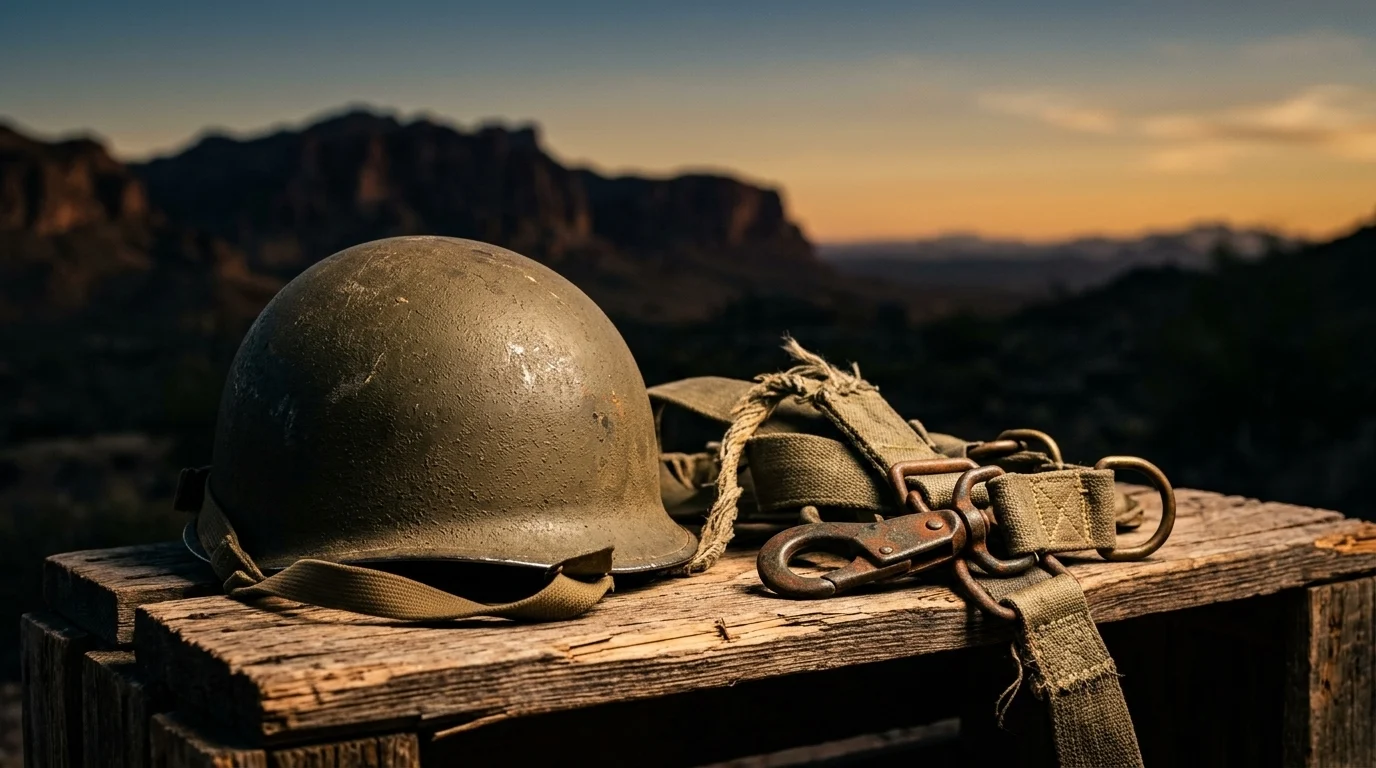
Quick Answer: Geronimo is a name of Spanish and Italian origin meaning “sacred name,” derived from the Greek Hieronymos (hieros = sacred, onoma = name). It is most famously associated with the Apache leader Goyathlay, whom Mexican soldiers nicknamed “Geronimo,” and later became a iconic jump cry for American paratroopers during World War II.
Geronimo carries a triple identity that few words can match. It is a given name with ancient Greek roots, the adopted name of one of the most feared and revered Native American leaders in history, and a battle cry that echoed from parachutes over Normandy. Each layer of meaning informs the others, creating a symbol that is simultaneously sacred, defiant, and thrilling.
Understanding Geronimo requires separating these strands without losing sight of how they intertwine. The name began as a religious reference, transformed into a label of resistance, and finally entered popular culture as an exclamation of courage. Together, these meanings explain why the word still resonates today.
What Does Geronimo Mean?
At its linguistic core, Geronimo is the Spanish and Italian form of the name Jerome. It derives from the Greek name Hieronymos, composed of hieros (meaning “sacred” or “holy”) and onoma (meaning “name”) . The full meaning is therefore “sacred name” or “one who bears a holy name.”
Nameberry lists the origin as Native American and Italian variation of Jerome, with the meaning “sacred name” . This dual classification reflects the name’s journey: it began as a European saint’s name and became indelibly associated with a Native American figure who reshaped its significance.
Pronunciation
English: /dʒəˈrɒn.ɪ.moʊ/ (juh-RON-ih-moh)
Spanish: /xeˈɾo.ni.mo/ (heh-ROH-nee-moh)
Word Origin
The name entered Spanish through the veneration of Saint Jerome (San Jerónimo), the 4th-century theologian who translated the Bible into Latin . The Italian form Geronimo follows the same root. When Spanish-speaking soldiers encountered the Apache leader Goyathlay in the mid-19th century, they applied this name to him—a detail that would permanently fuse the sacred name with a legacy of resistance.
The Apache Leader Who Carried the Name
The man the world knows as Geronimo was born Goyathlay (also spelled Gokhlaye) around 1829 in what is now New Mexico . He was a Bedonkohe Apache, not a hereditary chief, but a leader whose influence came from his reputation as a warrior and spiritual figure .
How Goyathlay Became Geronimo
The exact origin of the nickname is debated. One account holds that Mexican soldiers who fought against him invoked Saint Jerome during battle, crying “¡San Jerónimo!” for divine aid. The Apaches, hearing the repeated pleas, reportedly began calling him Geronimo . Another explanation ties the name to the Spanish pronunciation of his Apache name. What is certain is that the name stuck, and Goyathlay himself eventually adopted it in interactions with English speakers.
The Tragedy That Shaped Him
Geronimo’s life changed irrevocably in 1851. While he and other men were trading in a Mexican town, soldiers attacked his camp, killing his mother, his wife Alope, and their three young children . From that day forward, he directed decades of raids against Mexican and later American forces, driven by a desire for vengeance and a refusal to accept confinement on reservations .
His resistance continued until 1886, when he surrendered to the U.S. Army for the final time. He spent the remaining years of his life as a prisoner of war, first in Florida and Alabama, and later at Fort Sill, Oklahoma, where he died in 1909 . Despite his captivity, he became a celebrity of sorts, even riding in President Theodore Roosevelt’s 1905 inaugural parade .
From Battlefield to Battle Cry: The Paratrooper Tradition
The most surprising chapter in Geronimo’s legacy began not in the American West, but in the skies over Georgia. In 1940 or 1941, a platoon of Army parachute testers at Fort Benning prepared for their first mass jump. The night before, they watched a Western film featuring the Apache leader. When a fellow soldier taunted Private Aubrey Eberhardt that he would be too frightened to remember his own name during the jump, Eberhardt vowed to shout “Geronimo!” as he leapt .
He kept his word. The cry spread through the airborne units and became an official tradition. A 1942 New York Times article confirmed that “Geronimo” was the yell of the parachutist, a custom started by the first test platoon at Fort Benning . The 501st Parachute Infantry Regiment even incorporated the name into its insignia with the permission of Geronimo’s family .
Why the Cry Endured
The exclamation captured something essential about airborne soldiers: a blend of fear and bravado, a willingness to leap into the unknown. It required no explanation and carried no ambiguity. When a paratrooper yelled “Geronimo,” everyone understood the mix of terror and exhilaration behind it.
Geronimo Across Languages and Traditions
The name has variants across linguistic traditions, all tracing back to the same Greek root.
| Language | Form | Notes |
|---|---|---|
| Spanish | Gerónimo / Jerónimo | Standard forms; the accent shifts in Spanish |
| Italian | Geronimo | The form used for the Apache leader’s nickname |
| Greek (origin) | Hieronymos | The root name meaning “sacred name” |
| English | Jerome | The standard English form |
| Portuguese | Jerônimo | Portuguese variant |
Geronimo vs. Jerome: Same Root, Different Paths
Geronimo and Jerome share the same Greek origin, but they have diverged in usage. Jerome is a common English given name with a scholarly, religious association. Geronimo carries the weight of the Apache leader’s legacy—resistance, tragedy, and an unexpected second life as a cry of courage. The two names are linguistically siblings but culturally distinct.
Is Geronimo Still Used as a Name?
Geronimo remains a rare name in the United States. Nameberry reports that it ranked #3541 for boys in 2025, with a peak of #1138 in 1907 . Its rarity reflects the name’s heavy associations. Parents who choose it are likely drawn to its history or its sound rather than its popularity.
How to Use Geronimo Correctly
As a Historical Reference
When discussing the Apache leader, capitalize Geronimo and provide context. “Geronimo surrendered in 1886” is clear to readers familiar with American history, but adding “the Apache leader” ensures clarity for broader audiences.
As an Exclamation
The jump cry is typically written with an exclamation point: “Geronimo!” It functions as an interjection expressing exhilaration or courage in the face of a leap. It appears in military contexts, skydiving culture, and casual speech when someone is about to do something daring .
Common Mistakes to Avoid
- Do not confuse the man with the myth. Geronimo was a complex historical figure, not simply a symbol of resistance or a movie caricature. His story includes tragedy, violence, and survival.
- Avoid using the name casually without awareness of its history. For many Native Americans, Geronimo represents a painful era of displacement and warfare. Using it as a casual exclamation can feel dismissive of that history.
- Do not assume “Geronimo” was his birth name. It was a nickname given by others; his Apache name was Goyathlay.
Frequently Asked Questions
1. What does the name Geronimo mean?
Geronimo means “sacred name,” derived from the Greek Hieronymos (hieros = sacred, onoma = name). It is the Spanish and Italian form of the name Jerome .
2. Why did paratroopers yell “Geronimo”?
The tradition began with Private Aubrey Eberhardt, who vowed to shout the name during his first jump to prove he was not afraid. The cry spread through airborne units and became a symbol of paratrooper courage during World War II .
3. Was Geronimo a chief?
No. Geronimo was not a hereditary chief. He was a leader of the Bedonkohe band of the Chiricahua Apache, respected for his warrior skills and spiritual power rather than formal political authority .
4. What was Geronimo’s real name?
His Apache name was Goyathlay (also spelled Gokhlaye). “Geronimo” was a nickname given by Mexican soldiers and later adopted by English speakers .
5. Is Geronimo a common name today?
No. Geronimo is rare in the United States, ranking #3541 for boys in 2025. Its peak popularity was #1138 in 1907 .
6. Why is Geronimo associated with bravery?
His reputation as a warrior who evaded capture for years, combined with the paratroopers’ adoption of his name as a jump cry, has made Geronimo a symbol of courage and defiance .
Conclusion
Geronimo is a word with three lives. As a name, it means “sacred name,” a religious inheritance from Greek through Latin and Spanish. As a historical figure, it belongs to the Apache leader Goyathlay, whose resistance and tragedy left an indelible mark on the American West. As an exclamation, it belongs to the paratroopers who leapt from planes with his name on their lips.
These layers do not compete; they accumulate. To say “Geronimo” is to invoke a saint, a warrior, and a leap of faith all at once. The word carries the weight of history and the thrill of the unknown, which is precisely why it has never faded from use.