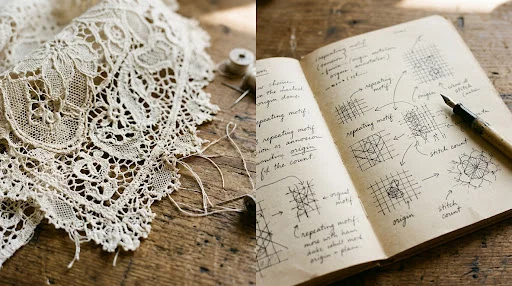
Quick Answer: Elaborate has two distinct meanings depending on how you use it. As an adjective, it describes something made with great care, intricate detail, or many carefully arranged parts. As a verb, it means to explain something more fully or to develop an idea into a more advanced state.
Elaborate is a word that splits cleanly in two. The adjective and the verb look identical on the page, yet they sound different when spoken and carry entirely different functions in a sentence. This dual identity makes elaborate a useful but occasionally tricky word for English learners and native speakers alike.
Understanding elaborate means mastering both its forms, recognizing the pronunciation shift that separates them, and knowing when each usage fits naturally. Once those distinctions become clear, the word becomes a precise tool for describing complexity and for asking for more information.
What Does Elaborate Mean?
As an adjective, elaborate describes something that is made or done with great care and contains many carefully arranged details . Merriam-Webster’s learner definition emphasizes both the care involved and the complexity of the result: an elaborate plan is not merely complicated—it is intricate by design . The dancers in elaborate costumes, the elaborate meal, the elaborate scheme—each example carries the sense of deliberate, detailed construction.
As a verb, elaborate means to give more details about something or to discuss it more fully . When someone asks you to “elaborate,” they want expansion, clarification, or additional information. The verb can also mean to develop an idea or plan into a more advanced state, as when a philosopher spends years elaborating a theory .
Pronunciation: The Critical Difference
The adjective and verb are pronounced differently, and this distinction matters for clear speech. The adjective is pronounced /ɪˈlæbərət/ (ih-LAB-uh-rit), ending with a soft “-rit” sound . The verb is pronounced /ɪˈlæbəreɪt/ (ih-LAB-uh-rayt), ending with a clear “-rayt” sound . The spelling is identical, but the final syllable shifts.
Word Origin
Elaborate comes from the Latin elaboratus, the past participle of elaborare, meaning “to work out” or “to labor greatly” . The prefix e- (a form of ex-, meaning “out”) combines with laborare (to work), so the root sense is “to work something out” or “to produce through labor” . The word entered English in the late 16th century .
Elaborate as an Adjective: Detail and Complexity
When used as an adjective, elaborate points toward careful construction and intricate design. Wordsmyth defines it as “planned or carried out with great care and attention to details” . Dictionary.com adds a second shading: “marked by intricate and often excessive detail; complicated” . That “often excessive” note matters—elaborate can carry a faint criticism when the detail seems unnecessary or overwrought.
Common Collocations
Certain nouns pair naturally with elaborate. Plans, schemes, costumes, meals, preparations, and designs all appear frequently in usage examples . An elaborate plot suggests careful planning, perhaps with many moving parts. An elaborate meal suggests multiple courses and careful presentation. An elaborate costume suggests ornamentation and attention to visual impact.
The Spectrum from Intricate to Excessive
Not every elaborate thing is elaborate in the same way. A lace pattern can be elaborate in the sense of rich, intricate beauty . A bureaucratic procedure can be elaborate in the sense of needlessly complicated. The word’s tone depends on context: admiration for craftsmanship, or frustration at unnecessary complexity.
Elaborate as a Verb: Explanation and Development
The verb form of elaborate functions in two related ways. The first and more common is to explain or describe something in greater detail . When someone says “Could you elaborate?” they are asking for expansion—more specifics, more context, more clarity. The verb is often followed by “on” or “upon”: “She elaborated on her earlier statement” .
The second usage is developmental rather than explanatory. To elaborate an idea or plan means to work it out, refine it, or bring it to a more advanced state . A writer might elaborate a theme across several chapters. A philosopher might spend years elaborating a theory. In this sense, elaboration is a creative or intellectual process, not merely a communicative one.
Elaborate vs. Explain
Elaborate and explain overlap, but they are not identical. Explain focuses on making something clear or understandable. Elaborate focuses on adding detail, expanding scope, or developing complexity. You can elaborate without fully explaining, and you can explain without elaborating. The verb elaborate suggests that the basic idea is already present and now needs filling out.
Elaborate Across Languages and Contexts
The word has equivalents in many languages, most of them carrying the same dual sense of detail and development.
| Language | Form | Notes |
|---|---|---|
| Spanish | Elaborar | Verb form; also used for producing or manufacturing |
| French | Élaborer | Emphasizes development and working out |
| German | Ausarbeiten | Literally “to work out” |
| Italian | Elaborare | Closely mirrors the Latin root |
| Portuguese | Elaborar | Standard equivalent |
| Arabic | يُفَصِّل (Yufassil) | Emphasizes detailing or specifying |
| Mandarin | 详细说明 (Xiángxì shuōmíng) | Emphasizes detailed explanation |
Source: Khandbahale dictionary compilation .
Elaborate in Academic and Professional Writing
In academic contexts, “elaborate” appears frequently as a verb in peer review and discussion. Reviewers ask authors to elaborate on methodology or elaborate on findings. The word signals a request for depth without implying that the existing work is wrong—only that it is incomplete. In professional settings, “could you elaborate?” is a polite way to request more information without sounding confrontational.
Elaborate in Physiology
A specialized usage appears in physiology and biology: to elaborate means to convert food or simple substances into more complex substances for use within the body . This technical sense is rare in everyday speech but appears in medical and biological texts. It connects back to the Latin root sense of “working out” or “processing.”
How to Use Elaborate Correctly
As an Adjective
Place elaborate before the noun it modifies. “They made elaborate preparations” is standard. “The plan was elaborate” works as a predicate adjective. Avoid using the adjective form to mean “complicated” in a neutral or technical sense—elaborate carries connotations of care and design, not merely difficulty.
As a Verb
Use elaborate with “on” or “upon” when introducing the topic being expanded: “He elaborated on the proposal.” Use elaborate as a transitive verb when developing something: “She elaborated her argument in the second chapter” . The verb is often used in the imperative in conversation: “Please elaborate.”
Common Mistakes to Avoid
- Do not confuse the pronunciations. Using the adjective pronunciation for the verb (or vice versa) sounds incorrect to native speakers. The verb ends with a “-rayt” sound; the adjective ends with a “-rit” sound.
- Do not use elaborate as a synonym for “complicated” in technical writing. A complicated system may be messy or difficult; an elaborate system is intricately designed. The words carry different implications.
- Avoid overusing “elaborate” as a verb in casual conversation. “Can you elaborate?” is perfectly fine, but repeating it frequently can sound formal or evasive. “Tell me more” is a simpler alternative.
Frequently Asked Questions
1. What is the simple definition of elaborate?
As an adjective, elaborate means made with great care and intricate detail. As a verb, it means to explain something more fully or to develop an idea into a more detailed form.
2. How do you pronounce elaborate?
The adjective is pronounced ih-LAB-uh-rit. The verb is pronounced ih-LAB-uh-rayt. The difference is in the final syllable.
3. What is the difference between elaborate and explain?
Explain focuses on making something clear. Elaborate focuses on adding detail or expanding scope. You can elaborate without fully explaining, and you can explain something briefly without elaborating.
4. Is elaborate a positive or negative word?
It depends on context. Elaborate can suggest careful craftsmanship and admirable complexity. It can also suggest excessive or needless complication. Tone and context determine the shading.
5. What does “elaborate on that” mean?
It means “give more details about that” or “explain that more fully.” The phrase is a polite request for expansion or clarification.
6. Where does the word elaborate come from?
It comes from the Latin elaborare, meaning “to work out” or “to labor greatly.” The word entered English in the late 16th century.
Conclusion
Elaborate is a word with two faces. The adjective describes things made with care and intricate detail—costumes, plans, meals, schemes. The verb asks for more information or describes the process of developing an idea into something fuller. The pronunciation shift between the two forms is the key to using the word correctly in speech.
Whether you are describing a beautifully complex design or asking a colleague to expand on a point, elaborate offers precision. Its Latin roots in labor and working-out remind us that detail and development both require effort. Used well, the word does exactly what it names: it adds the detail that clarity demands.