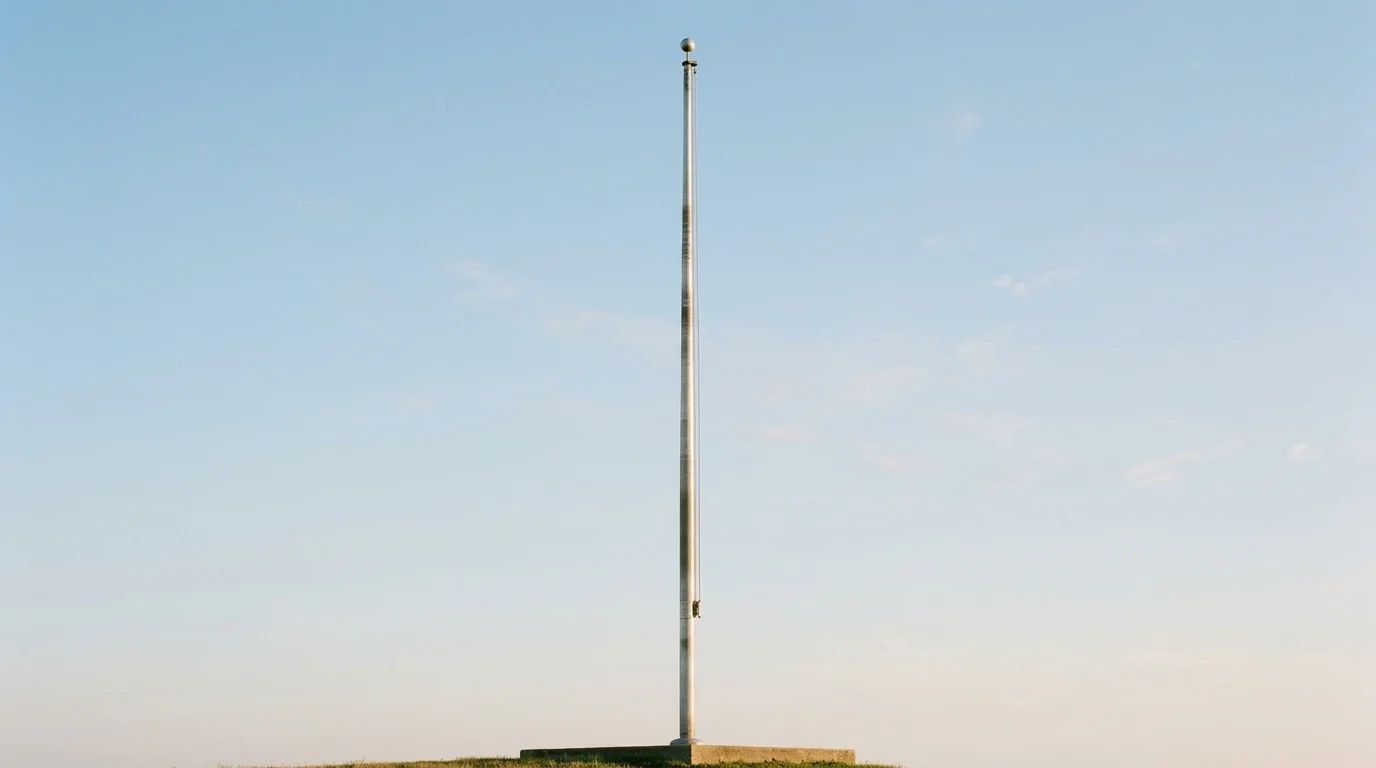
Quick Answer: Erect means straight up and down, upright in position, or in a state of physiological erection due to sexual excitement. As a verb, it means to build, construct, or set something upright.
Erect is a word that carries two distinct lives. In everyday language, it most often appears as an adjective describing something standing straight a flagpole, a posture, a plant stem. In biological and medical contexts, it describes the physiological state of certain tissues becoming firm and swollen. As a verb, it belongs to construction and establishment, describing the act of building or raising something into position.
Understanding erect requires separating these layers without losing sight of their shared core. The Latin root points toward the idea of setting something straight up, and every modern usage extends from that fundamental image. Whether you are describing a soldier’s bearing, a physical response, or the building of a monument, the word retains its connection to uprightness and elevation.
What Does Erect Mean?
At its most basic, erect describes a position that is vertical, upright, and not bent or leaning. Merriam-Webster’s Learner Dictionary defines the adjective as “straight up and down,” offering examples like an erect pole, erect trees, and soldiers standing erect . Britannica adds that it can describe something “in a state of erection because of sexual excitement: swollen and stiff” .
As a verb, erect means to build something by putting together materials or to set something in an upright position. The city erects a statue; settlers erect a stone wall; campers erect a tent . The word also extends figuratively to establishing systems or institutions, such as erecting barriers to progress or erecting a regional infrastructure .
Pronunciation
British English: /ɪˈrekt/ (ih-REKT)
U.S. English: /ɪˈrekt/ (ih-REKT)
Word Origin
Erect comes from the Latin erectus, the past participle of erigere, meaning “to set up” or “to raise.” The root combines e- (out, up) with regere (to lead straight, guide) . The word entered Middle English in the 14th century as an adjective and the 15th century as a verb, carrying the same sense of uprightness and construction that it holds today .
The Adjective: Upright and Physiological Meanings
The adjective form of erect operates across several distinct domains, each preserving the core idea of standing straight.
Physical Posture and Objects
The most common usage describes something standing vertical or a person holding themselves straight. A soldier stands erect. A plant has an erect stem. A building’s columns remain erect even in ruins . This sense extends to body parts that stand up or out from the body, such as erect hairs or a dog’s erect ears . The common thread is firmness and verticality—a refusal to bend or droop.
Physiological Erection
The medical and biological usage describes tissues that become firm and swollen due to blood flow, typically in response to sexual excitement. Merriam-Webster defines this sense as “being in a state of physiological erection” . The Collins Dictionary specifies that this applies to the penis, clitoris, or nipples becoming “firm or rigid after swelling with blood” . This meaning is distinct from the general upright sense but follows the same logic: something that was soft or relaxed has become stiff and elevated.
Botanical and Optical Usages
In botany, an erect plant part grows vertically or at right angles to the part from which it arises . In optics, an erect image has the same orientation as the object being viewed—it is not inverted . Both usages extend the core meaning of “straight up” into specialized technical vocabularies.
The Verb: Building and Establishing
As a verb, erect is formal and often implies deliberate, purposeful construction. It covers physical building, upright placement, and abstract establishment.
Physical Construction
To erect something is to build it by assembling materials or to raise it into an upright position. The Longman Dictionary offers examples: a town hall erected in 1892, police erecting barriers, and campers erecting a tent . The verb suggests intentional effort—you erect a monument, a wall, a flagpole, or a scaffold. It is more formal than “build” or “put up,” which is why it appears frequently in news reports and official descriptions.
Establishing Systems and Barriers
The verb extends beyond physical objects to systems, institutions, and obstacles. Officials erect a regional infrastructure. Political enemies erect barriers to progress. A government erects a legal framework . In these usages, erect means to establish or set up something that functions like a structure—it stands, it supports, or it blocks. The metaphorical extension is natural: an institution is “built” in much the same way as a building.
Raising into Position
A narrower physical sense involves setting something upright that was previously horizontal or lowered. You erect a flagpole by raising it into position. A peacock erects its tail. The verb describes the act of causing something to stand up or stand out .
Erect vs. Erected: Understanding the Forms
The word’s forms follow standard English patterns, but a few distinctions are worth noting.
| Form | Part of speech | Meaning | Example |
|---|---|---|---|
| Erect | Adjective | Upright, straight, or physiologically swollen | The soldiers stood erect. |
| Erect | Verb (base) | To build or set upright | They plan to erect a monument. |
| Erected | Verb (past tense/participle) | Built or set upright in the past | The statue was erected in 1920. |
| Erecting | Verb (present participle) | The act of building or raising | Crews are erecting the scaffolding. |
| Erection | Noun | The act of building, or the physiological state | The erection of the bridge took two years. |
The noun erection carries both the construction meaning and the physiological meaning, and context determines which is intended. The adjectival form erect is distinct from erectile, which specifically relates to the capacity for physiological erection.
How to Use Erect Correctly
As an Adjective
Use erect to describe posture, objects, or physiological states. “She sat erect, listening for her name” is a standard example of the posture sense . “The rabbit looked around with ears erect” demonstrates the body-part usage . In medical or biological writing, “erect penis” or “erect nipples” uses the physiological sense directly.
As a Verb
Use erect when describing formal or deliberate construction. “The city erected a statue in his honor” is idiomatic and natural . “The settlers erected a stone wall” follows the same pattern . For casual conversation, “put up” or “build” often sounds more natural, but erect remains correct and precise.
Common Mistakes to Avoid
- Do not confuse erect with “erectile.” Erect describes a state; erectile describes a capacity or function. A tissue can be erect without being erectile in the medical sense, though the terms overlap in physiology.
- Avoid using erect casually for physiological states. The adjective is clinical and direct. In casual conversation, people typically use other phrasing. Reserve “erect” for contexts where precision matters.
- Do not assume erect always means “standing.” A building that has been erected is standing, but the verb can also mean establishing something abstract, like a system or a barrier. The core idea is “set up,” not necessarily “standing vertically.”
Frequently Asked Questions
1. What is the simple definition of erect?
Erect means straight up and down, upright in position. As an adjective, it can also describe a physiological state of firmness due to sexual excitement. As a verb, it means to build or set something upright.
2. What is the difference between erect and erected?
Erect is the base form, used as an adjective (“the pole is erect”) or a verb (“they will erect the tent”). Erected is the past tense or past participle (“the statue was erected in 1920”).
3. Is erect a medical term?
It can be. The adjective describes the physiological state of tissues that have become firm and swollen with blood. The noun form, erection, is standard in medical contexts. However, erect also has non-medical meanings related to posture and construction.
4. What does it mean to erect a barrier?
To erect a barrier means to set up or establish an obstacle, either physical or figurative. Physical barriers might be fences or walls; figurative barriers might be policies or rules that prevent progress.
5. Can erect describe a plant?
Yes. In botany, an erect plant part grows vertically or stands straight up rather than spreading out or drooping. An erect stem is one that grows upright .
6. What is the origin of the word erect?
Erect comes from the Latin erectus, meaning “set up” or “raised,” from the verb erigere. The root combines e- (up) and regere (to lead straight). It entered English in the 14th century .
Conclusion
Erect is a word that connects the physical and the physiological, the built and the biological. Its core meaning straight up, set upright remains consistent across its many uses. As an adjective, it describes posture, plant growth, and physiological firmness. As a verb, it describes deliberate construction and establishment. The Latin root regere, meaning to lead straight, still echoes in every usage.
Whether encountered in a construction report, a medical text, or a simple description of a soldier standing at attention, erect points toward the same fundamental idea: something that has been raised, set straight, and made to stand.